
World-First Jaguar-Protection Insurance in Misiones, Argentina: Protecting wildlife and supporting livestock farmers
Full Solution

Jaguar
Emilio White
The jaguar (yaguareté) is the largest feline in the Americas and a national symbol in Argentina, yet fewer than 250 remain nationwide, about 90 in Misiones. Habitat loss and declining prey have increased jaguar predation on livestock and pets, harming farmer's income and driving retaliatory killings. To transform conflict into coexistence, the Government of Misiones, UNDP (BIOFIN and IRFF), the insurer Río Uruguay Seguros, and the NGO Aves Argentinas developed the world’s first jaguar-protection insurance.
Purchased by the province of Misiones and offered free of charge to residents, the insurance provides prompt compensation to producers for verified jaguar predation. Launched in April 2025, the scheme verified five claims in its pilot phase in Comandante Andresito and has since expanded to other municipalities affected by human–jaguar conflict. By protecting rural livelihoods, the insurance discourages retaliation and protects the jaguar.
Last update: 08 Jan 2026
38 Views


Context
Challenges addressed
Environmental:
Jaguar populations in Argentina are critically endangered, with fewer than 250 individuals remaining nationwide and about 90 in Misiones. Habitat loss, fragmentation, and natural prey decline have increased human–jaguar interactions. Retaliatory killing following livestock and pet predation is one of the leading causes of jaguar mortality, threatening its survival and the ecological balance of the Atlantic Forest.
Economic:
Small-scale livestock farmers living near jaguar habitats depend heavily on their animals for income and subsistence. The loss of a single calf or sheep can represent years of work, significantly affecting livelihoods. A fast and fair compensation can revert the need to stop the “threat” to their animals.
Social:
Repeated predation generates fear and a sense of injustice among rural families, undermining trust in conservation efforts. Addressing these tensions requires restoring confidence, reducing economic vulnerability, and creating conditions for human-jaguar coexistence.
Location
Misiones, Argentina
South America
Process
Summary of the process
The jaguar insurance aims to discourage retaliatory hunting by financially compensating farmers who lost livestock or pets due to jaguar predation. The insurance is collective and free of charge, covering all residents within the province of Misiones at no cost. To guarantee that the insurance effectively compensates for jaguar predation, local organizations with pre-established relationships with farmers conduct on-site inspections and, once predation is confirmed, insurance payouts are quickly made. Lastly, a livestock management support plan is also provided free of charge to affected farmers, strengthening measures to prevent future predation and raising awareness of jaguar protection.

Building Blocks
Collective and free-of-charge insurance mechanism
The jaguar insurance discourages retaliatory hunting by financially compensating farmers who lost livestock or pets to jaguar predation. The company Río Uruguay Seguros designed the insurance product in partnership with the Government of Misiones, local organizations, and UNDP's Insurance and Risk Finance Facility (IRFF) and Biodiversity Finance Initiative (BIOFIN). While livestock insurance was already common in Argentina, the jaguar insurance is groundbreaking by being:
- Collective: Over 90,000 residents across the province of Misiones are covered by the insurance. It compensates for the loss of cattle, pigs, sheep, goats, poultry, dogs, and cats.
- Free of charge: The province of Misiones purchased the insurance and is the policyholder, paying a low fixed annual premium. All residents exposed to jaguar predation on their animals are insured for free, directly receiving the compensation.
- Specialized in jaguar predation, creating a new type of alliance between insurers, NGOs, and provincial governments (park rangers). Beyond claim verification, these stakeholders can engage rapidly with claimants, reduce conflict, promote coexistence, and support risk-mitigation measures.
This innovative structure enables governments to cover all inhabitants within a geographical area, aligning financial resilience with biodiversity conservation.
Enabling factors
- Strong public-private cooperation to design the insurance mechanism.
- Interest from the Government of Misiones in purchasing the insurance.
Lesson learned
- Free-of-charge alternatives that prevent farmers’ losses help to address the root connection between jaguar hunting and local livelihoods, realigning incentives and encouraging behavioral change.
- Public-private partnerships can be very effective in developing innovative market-based solutions that support biodiversity conservation.
- Insurance mechanisms provide predictability for government budgets, as the province pays a fixed premium instead of covering the costs of each jaguar predation individually.
On-site verification of claims and agile payment provision
Following the loss of livestock or pets, farmers should quickly fill out a claim with the insurance company. Then, local NGOs and park rangers conduct on-site verifications to inspect whether losses indeed resulted from a jaguar predation.
These stakeholders have a pre-existing relationship with local communities, which encourages the submission of claims and increases farmers' trust and openness to the verification process. Moreover, any NGO selected by the insurer must have proven experience and expertise in jaguar behavior, enhancing accurate predation identification and proper use of the insurance. They conduct interviews and assess paw prints, predation patterns on the carcass, GPS signals when available, camera traps, and other tools to confirm predation.
During the several visits required to verify the claim, the trained NGO gets to work with the claimant, deescalating the conflict.
Once a jaguar predation is confirmed, the person affected quickly receives the insurance payout through a digital wallet or bank account. This agile process is fundamental to discourage retaliatory hunting by compensating losses promptly.
Enabling factors
- Pre-existing relationships between local organizations and communities, enhancing farmers' adherence to the insurance.
- Local organizations' expertise in jaguar behavior.
Lesson learned
- Ensuring farmers quickly fill out claims is fundamental for the accurate identification of jaguar predation.
- Promptly providing payouts is key to discourage retaliatory hunting.
- Using trusted local conservation organizations for verification significantly increases reporting rates and acceptance of outcomes among producers.
Livestock management support plan for affected farmers

Following a claim payout, a free-of-charge support plan is immediately activated and offered by the verifying local NGO.
Farmers receive assistance in designing a livestock management improvement plan, including field-tested techniques to decrease the likelihood of jaguar predation. The NGO also conducts periodic visits paid by the insurer to help farmers de-risk their operations.
During this process, farmers collaborate closely with conservation specialists, which is essential to raise awareness of the risk of jaguar's extinction and the importance of protecting this species.
As an ongoing solution, UNDP will also support the Government of Misiones by developing and providing a free livestock management guideline to prevent jaguar predation and inform farmers on how to respond when incidents occur. In parallel, communication campaigns will be implemented across all new municipalities incorporated into the insurance scheme, and a new rural school programme focused on wildlife coexistence and livestock management will target most affected municipalities.
By integrating risk reduction with financial protection, the insurance scheme shifts incentives away from lethal responses and toward sustainable coexistence, strengthening both biodiversity conservation and rural resilience.
Enabling factors
- Technical support in designing and implementing a livestock management plan that reduces risks of human wildlife conflict.
- Willingness of farmers and other stakeholders to collaborate for sustainable coexistence.
Lesson learned
- On-site, close collaboration between local organizations, specialists, and farmers is essential to raise awareness about the risks of species extinction and the importance of conservation for the local ecosystem, culture, and the economy. Through their typical interactions, the verifying local NGO shares with farmers the importance of preserving jaguars and conserving biodiversity.
Stakeholder Mapping and Engagement for Claims Verification and Trust-Building
A multi-actor governance and engagement model was established to ensure accurate insurance design and effective operation. UNDP (through BIOFIN and IRFF) facilitated coordination among public authorities, the insurance sector, conservation organizations, and livestock producers in the province of Misiones.
The Subcommission for the Paraná Forest serves as a coordination platform between government bodies and civil society organizations responsible for decision-making related to jaguar conservation in Misiones. Prior approval from this body was an essential prerequisite for the development of the insurance; without its political endorsement, the solution could not have been implemented.
The product also needed to be approved by the insurance supervisor, which required technical meetings and a verification process to validate its compliance with all regulations.
Moreover, the involvement of organizations with long-standing relationships in the territory has been critical to ensuring community trust, accurate reporting, and acceptance of verification outcomes.
Given that any action related to jaguar conservation requires multi-level and multi-actor interventions, this type of insurance instrument demands early and sustained involvement of all key stakeholders responsible for protecting the species.
Enabling factors
- Strong multi-stakeholder coordination facilitated by UNDP, integrating public institutions, the insurance sector, conservation NGOs, and local producers.
- Pre-existing trust between local conservation organizations, park rangers, and rural communities.
- Clear institutional roles across verification, underwriting, and compensation processes.
- Technical expertise in jaguar ecology and human–wildlife conflict management.
Lesson learned
- Early and continuous engagement of all stakeholders is essential to build legitimacy and ensure that claims procedures respond to local realities.
- Replication requires investing time in stakeholder mapping, clarifying mandates, and aligning incentives across institutions before implementation. New areas of coverage will mean incorporating new trained local verifiers with the same high standards.
Impacts
The world’s first jaguar-protection insurance was launched in April 2025 as a pilot in the municipality of Comandante Andresito, Misiones, Argentina. During this phase, more than a dozen claims were filed, and five jaguar predation events involving calves were confirmed and compensated.
Since the launch of the insurance solution, no jaguar poaching incidents have been reported in the province of Misiones. In addition to its ecological importance, this achievement is notable given that in 2024 Argentina’s National Parks Administration valued the loss of a single yaguareté at more than USD 1.8 million.
In December 2025, the insurance scheme was scaled up to cover all municipalities in the province of Misiones with reported jaguar predation events, reaching over 90,000 residents.
The insurance delivers benefits across multiple dimensions:
- For farmers, it compensates for economic losses, strengthens local economic resilience, and discourages retaliatory hunting.
- From a conservation perspective, it contributes to reducing human–wildlife conflict and supports the protection of jaguar populations.
- For local governments, it provides budget predictability through a low, fixed annual premium and represents a cost-effective alternative to more expensive conservation measures.
- For the private sector, the product unlocks new market opportunities for insurance companies while enhancing their environmental responsibility.
Beneficiaries
- Farmers in the province of Misiones.
- Locals owning pets living in areas prone to predation by big cats.
- The population of jaguars.
- The entire population of Argentina, given jaguars' role in conserving other species and their importance as a national symbol.
Global Biodiversity Framework (GBF)
GBF Target 4 – Halt Species Extinction, Protect Genetic Diversity, and Manage Human-Wildlife Conflicts
GBF Target 14 – Integrate Biodiversity in Decision-Making at Every Level
GBF Target 19 – Mobilize $200 Billion per Year for Biodiversity From all Sources, Including $30 Billion Through International Finance
GBF Target 20 – Strengthen Capacity-Building, Technology Transfer, and Scientific and Technical Cooperation for Biodiversity
GBF Target 21 – Ensure That Knowledge Is Available and Accessible To Guide Biodiversity Action
Sustainable Development Goals
SDG 1 – No poverty
SDG 8 – Decent work and economic growth
SDG 15 – Life on land
SDG 16 – Peace, justice and strong institutions
SDG 17 – Partnerships for the goals
Story

Farmers in Misiones
UNDP Argentina
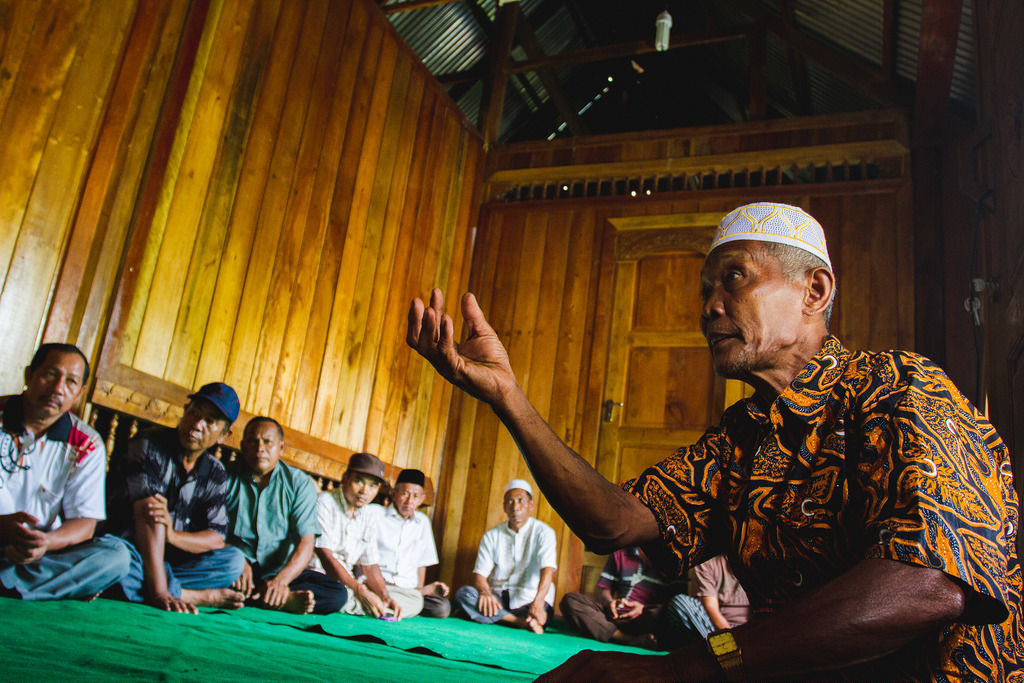
Diego is a sheep farmer and runs a family ranch. Hilda works in livestock farming with her husband Juan and their son Hugo. Adenir is a farmer. They all live in Comandante Andresito, a town in the province of Misiones, located on the Argentina border between Brazil and Paraguay. Together, they face the same challenge; living alongside jaguars.
"Every morning we check on the animals to make sure they're all here, especially since we know one of the jaguars is in the area," says Hugo. His mother, Hilda, adds, "I don't go out in the evening because these creatures tend to move around at dawn or dusk."
This isn’t an isolated incident. On several occasions cows, horses, goats and dogs have been attacked and retaliatory hunting has become one of the leading causes of jaguar death. Many farmers take drastic measures to prevent further losses, seeing the jaguar as a direct threat to their livelihood. To make matters worse, poaching and habitat loss also contribute to the growing tension.
With the insurance solution, Hilda, Juan, and Hugo feel like their work isn’t in vain anymore.
They say that before, they’d spend "a year and a half raising a calf, and the yaguareté would come and eat it in just one night."
The insurance is not just a financial tool but a lifeline for the species. By offering compensation and technical support to farmers who suffer losses, it helps transform fear into cooperation and conflict into coexistence.
The yaguareté plays a vital environmental role. It controls herbivore populations, helps prevent overgrazing and erosion and maintains the delicate balance of the jungle.
We invite you to read Hugo's, Hilda's, and other farmers' full stories through the following article and video.