Shorebirds conservation
Full Solution
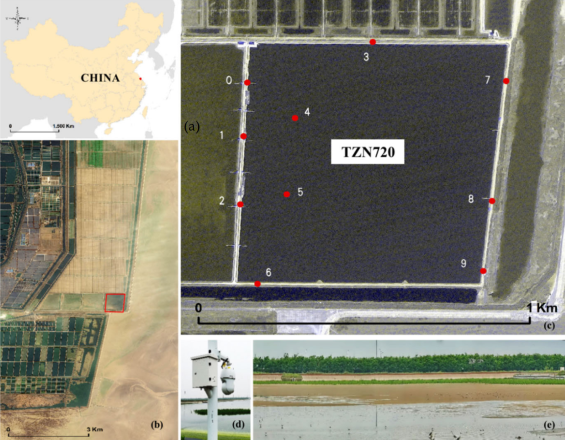
Overview of the Tiaozini wetland and 720 high tide roost site
CEAAF
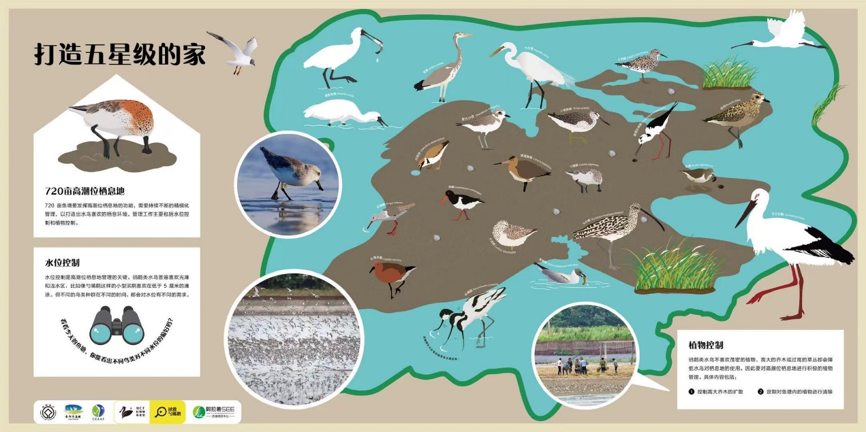
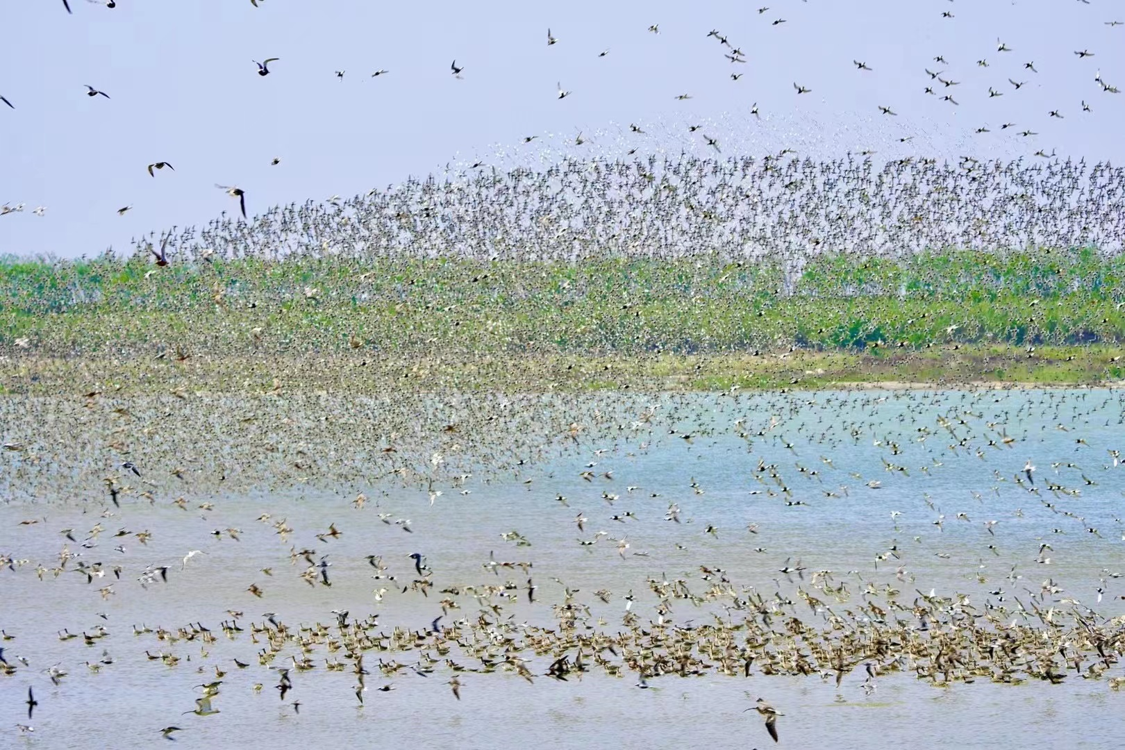
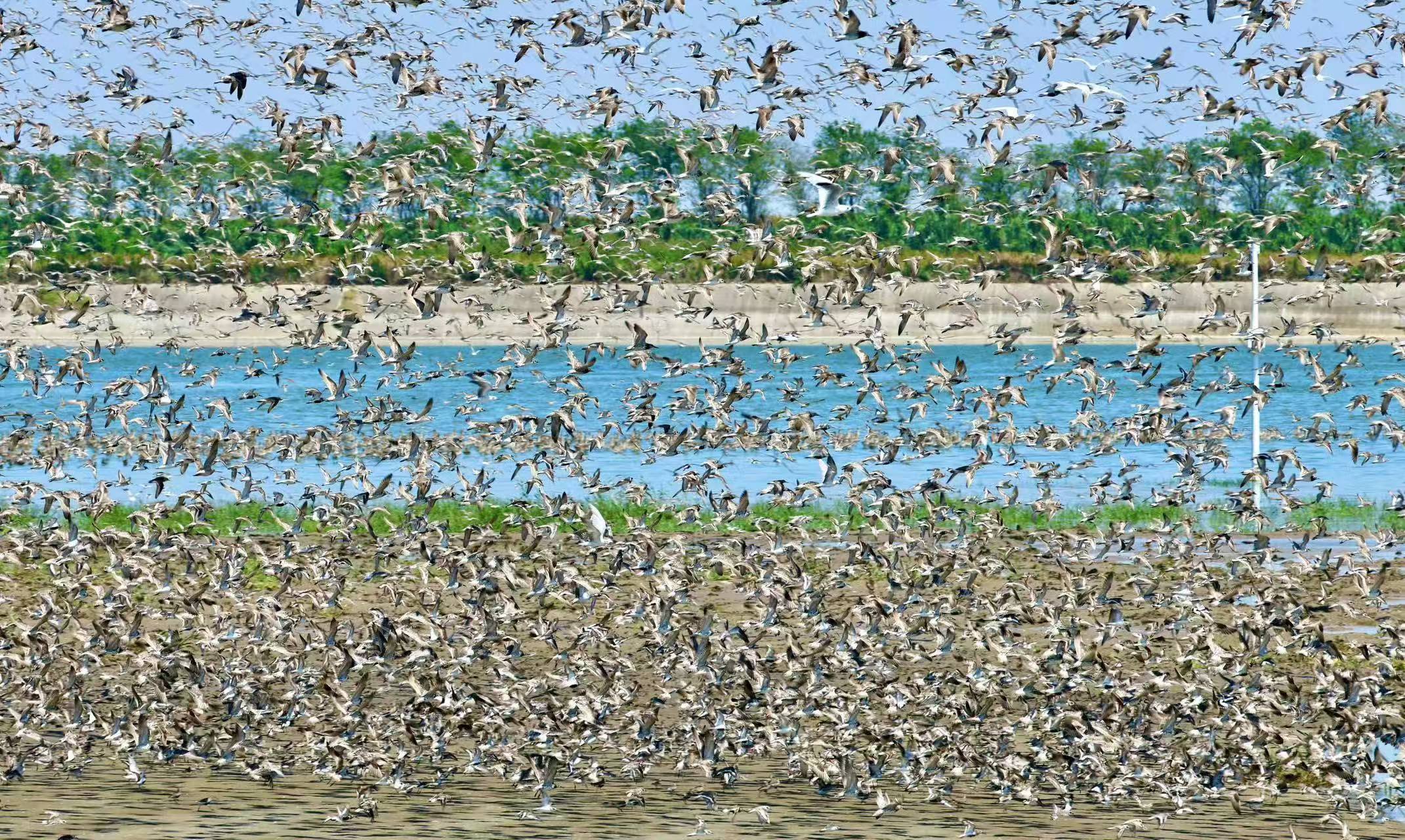
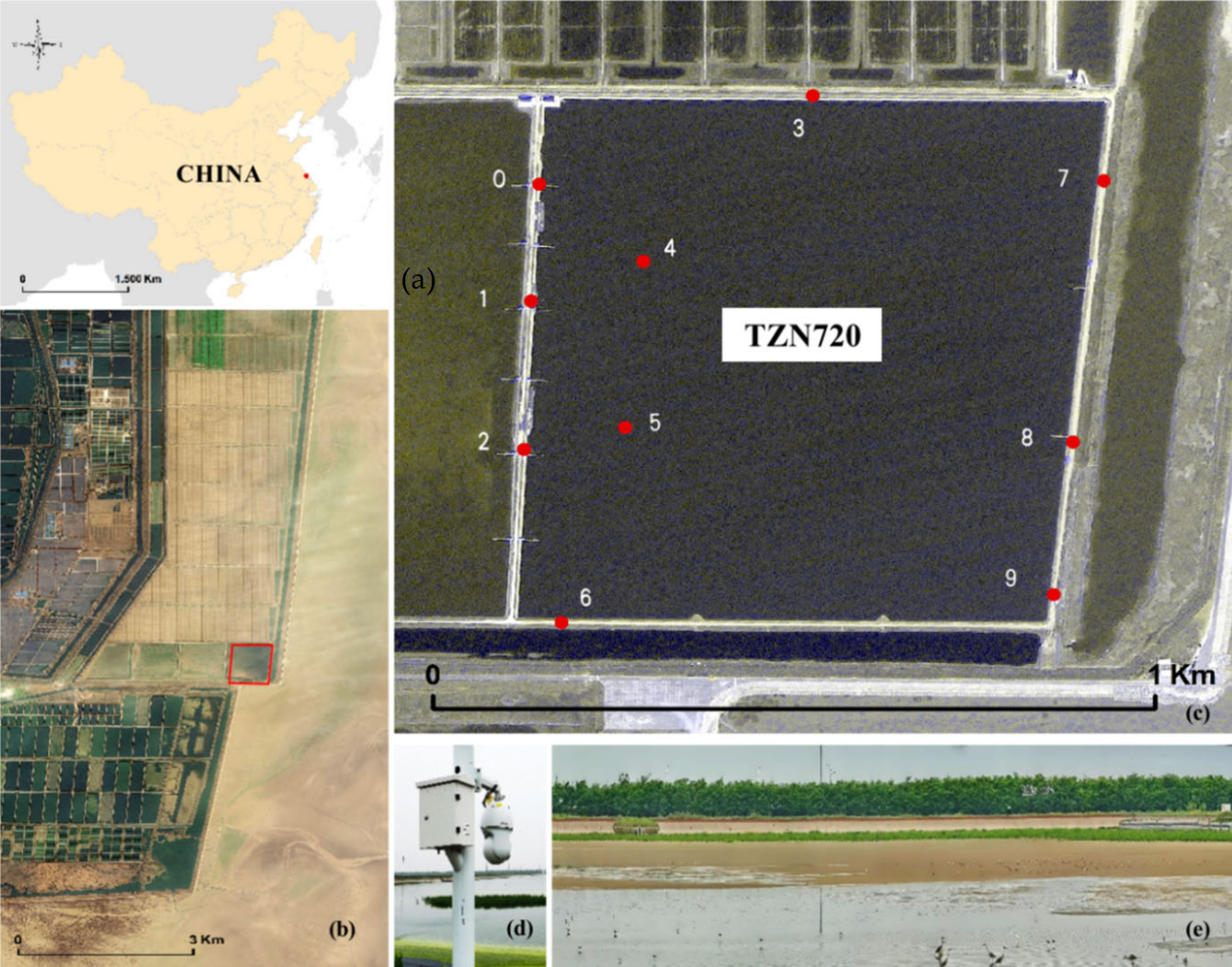
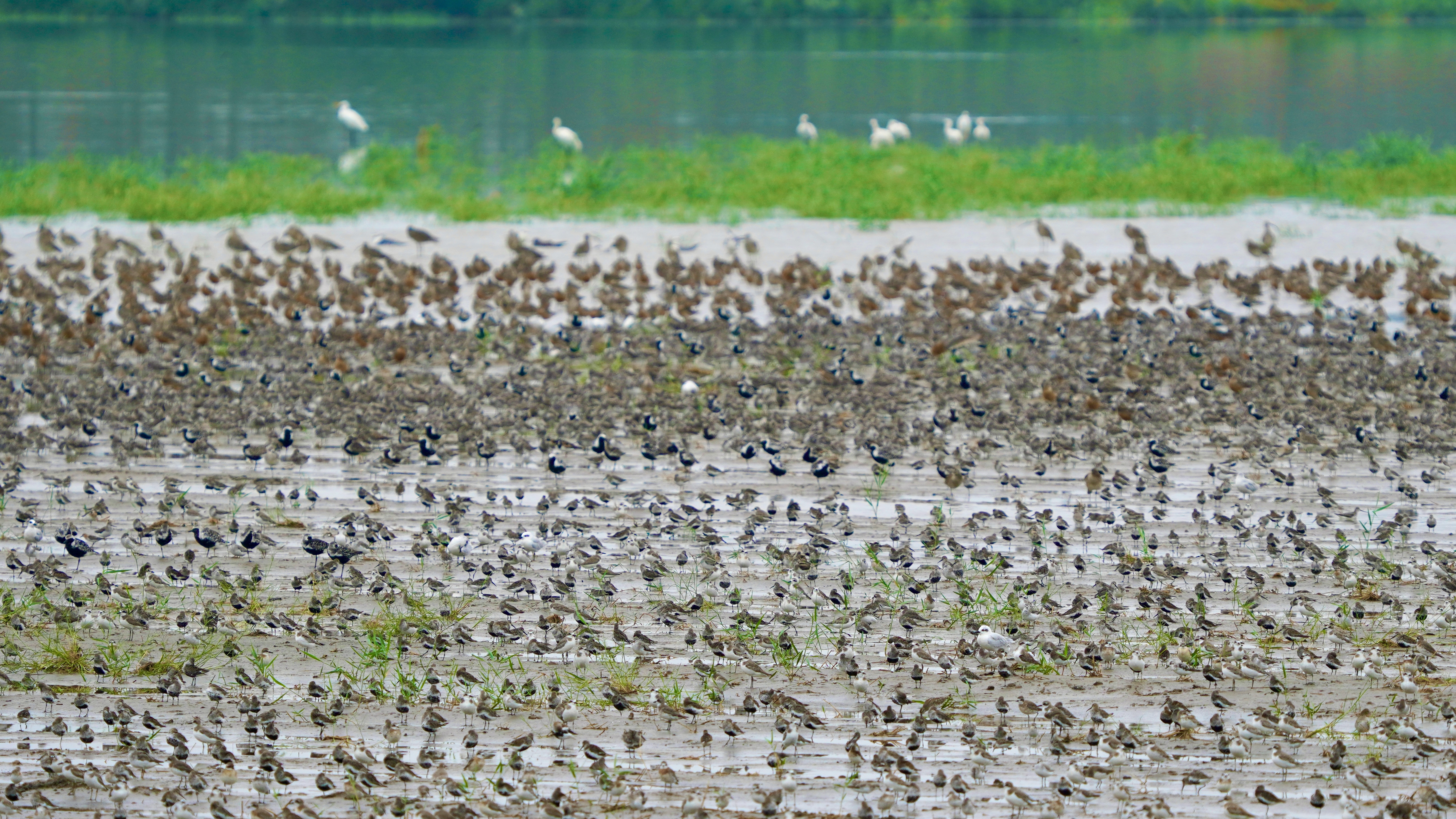
Reclamation led to a significant reduction in coastal wetlands, resulting in a dramatic decline in waterbirds, highlighting the urgent need to restore habitats. In order to provide an ideal high tide roost site for the most important shorebird staging site in Yellow Sea, we conducted a restoration project in Tiaozini Wetland. A 720 acre seaward fish pond was developed as a demonstration area for the restoration of high tide roost site. The project has successfully created habitats that meets the needs of various migratory waterbirds through a series of scientific measures such as micro terrain modification, water level regulation, vegetation control, and automatic auxiliary monitoring of waterbirds. Since its establishment, TZN720 has attracted a large number of waterbirds, with a single record of 188500 waterbirds in 2024. Our successful experience of this project has been included in the "Biodiversity 100+Cases" released at the 15th Conference of the Parties to the Convention on Biological Diversity (CBD-COP15) NGO Forum.
Last update: 31 Oct 2025
296 Views
Context
Challenges addressed
Reclamation not only reduces the foraging grounds for waterbirds, but also decreases their roost sites at high tides. During the spring tide, most of the mudflats are submerged, and waterbirds are forced to enter the artificial reclamation area to rest. However, due to human production activities, the quality of the high tide roost sites in the reclamation area is very unstable, so it is an important protection measure to restore high-quality high tide roost site for migrants in the important bird distribution areas. After the constraction of the restoration, its effectiveness needs to be evaluated and monitored for a long term. Recently, unmanned devices such as video surveillance have been widely used in monitoring waterbird communities in coastal wetlands. However, the large amount of video recordings presents a dual challenge of storage and analysis. The manual analysis method is time-consuming and prone to errors, which is an important bottleneck for rapid data processing and the promotion and application of results.
Location
Dongtai, Yancheng, Jiangsu, People's Republic of China
East Asia
Process
Summary of the process
The waterbird automatic auxiliary monitoring system developed in this project can process the massive waterbird data collected by high-definition surveillance cameras, such as identification, counting, and density estimation. This enables the management department to monitor the waterbird community using this high tide roost site with higher accuracy, and to evaluate and manage this restored roost site in a timely and effective manner.
Building Blocks
Create and manage a high quality roost site for shorebirds
Through a series of scientific measures such as micro terrain modification, water level regulation, and wetland ecological restoration, we aim to create a habitat environment that can meet the needs of various migratory birds. After the completion of the restoration project, in daily management, the high tide roost site needs to maintain a certain proportion of bare flats, shallow water areas, deep water areas, and controlled low vegetation areas. By manually controlling the water level to ensure the relative stability of different water level areas, controlling the height of weeds to maintain the bare flats area, in order to provide the habitats of different migratory waterbirds such as shorebirds, herons, gulls, ducks, etc. Using unmanned devices such as video surveillance to assist in monitoring waterbird communities, in order to evaluate the patterns of habitat use by these migratory birds and subsequently assess habitat quality.
Video surveillance monitoring of waterbird communities
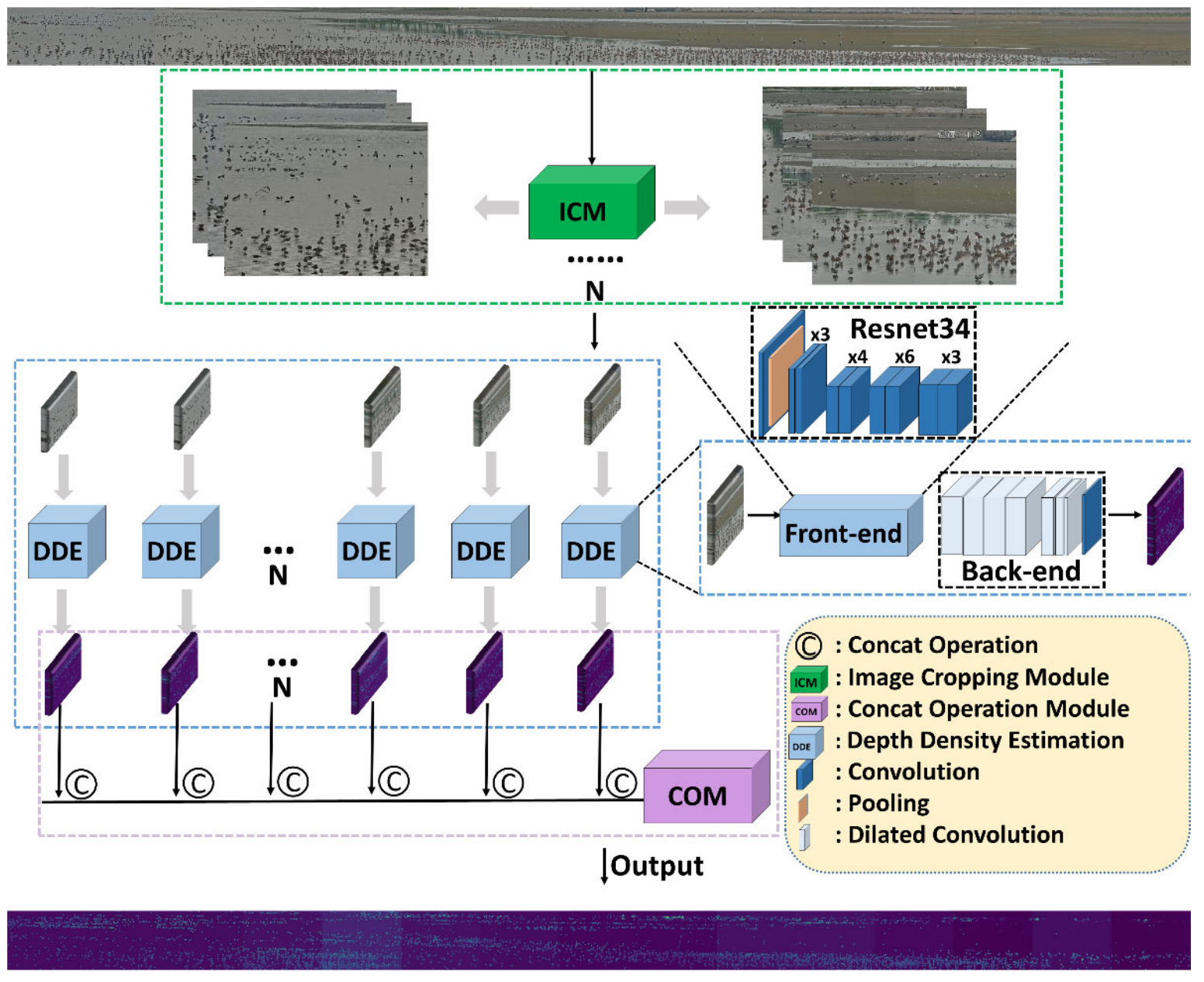
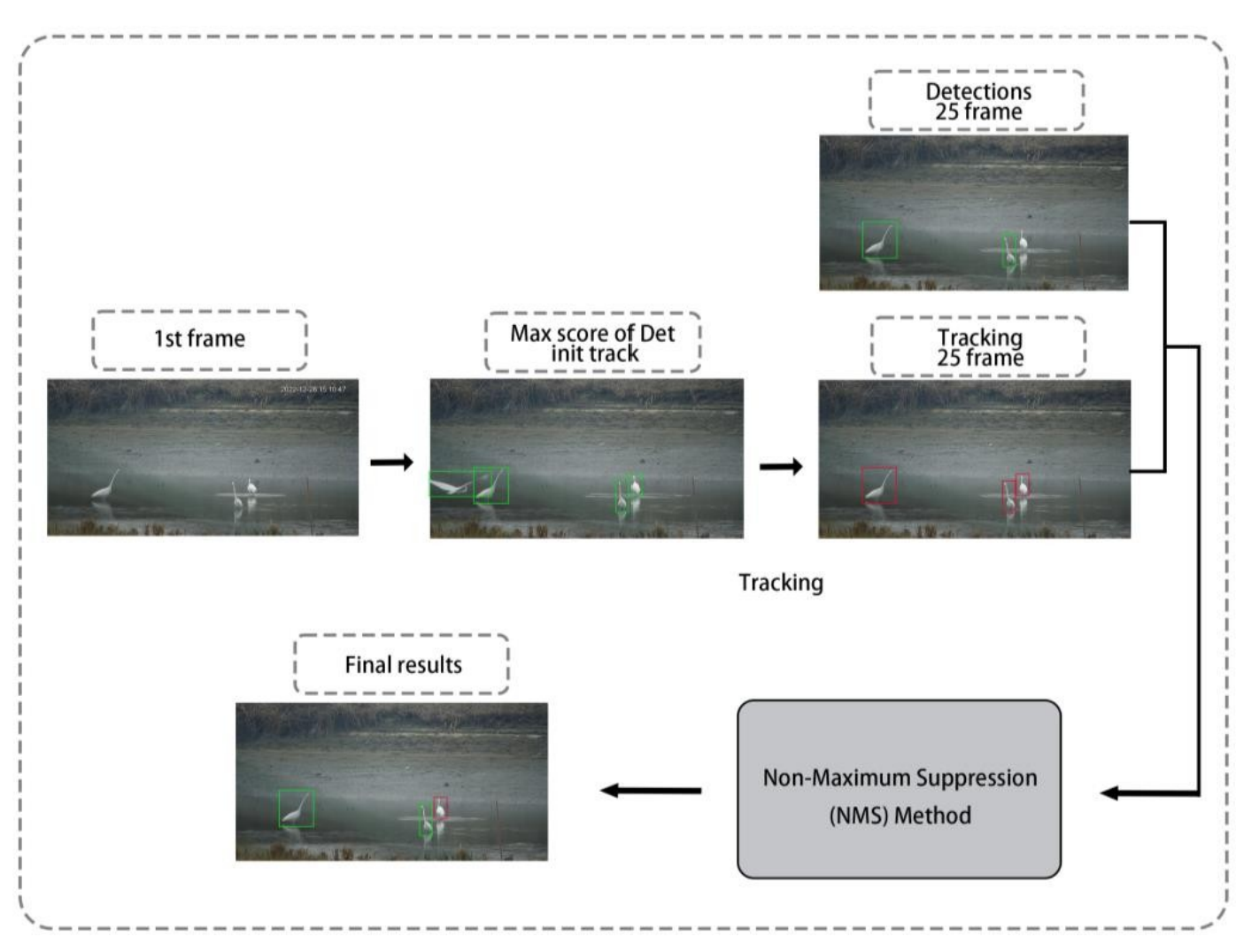
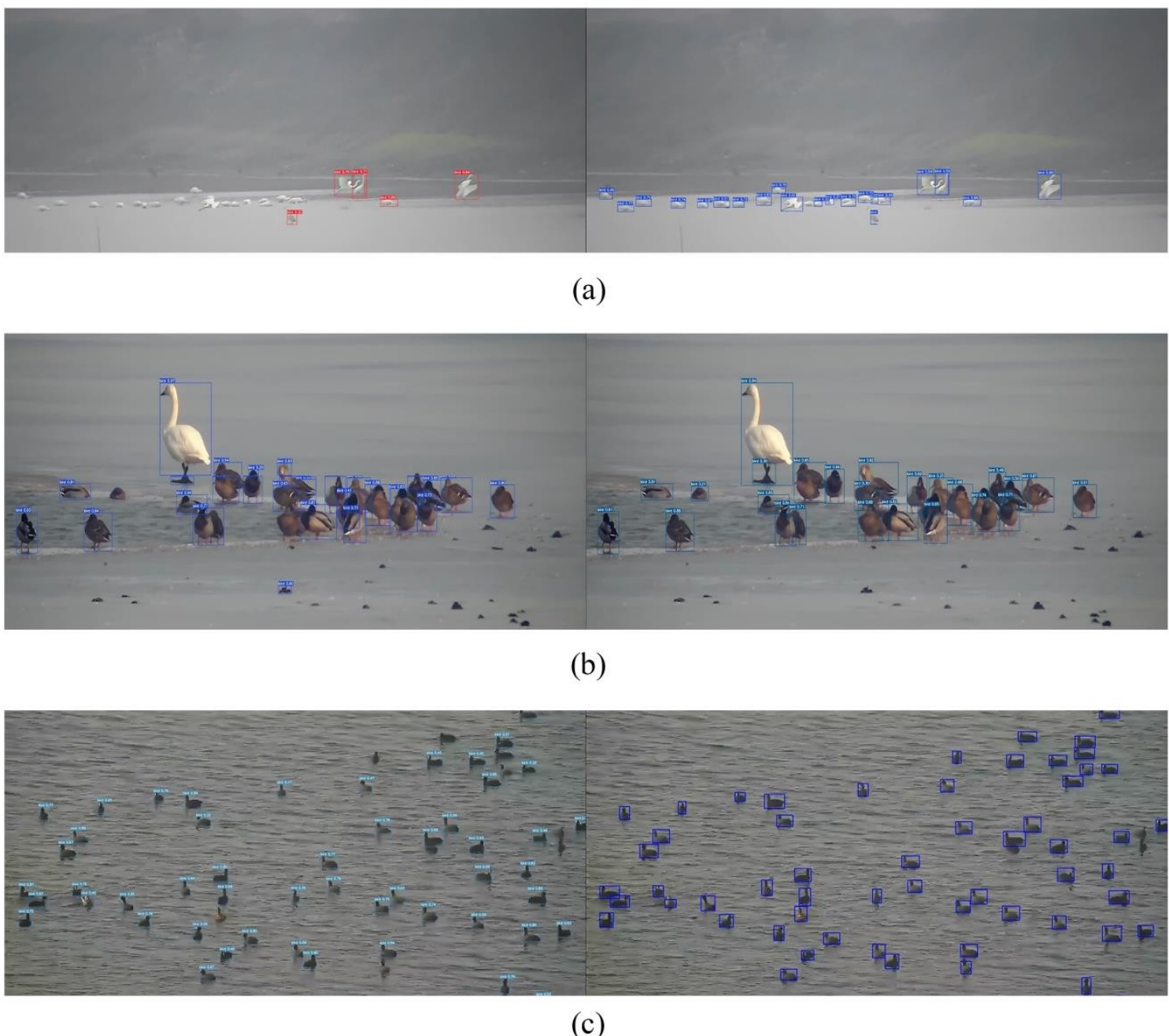
Waterbird monitoring is the foundation of protection and management strategies for almost types of wetland ecosystems. With the continuous improvement of wetland conservation infrastructure in China, including remote devices for collecting large amounts of acoustic and visual data of wildlife, the demand for data filtering and analysis technology is increasing. Deep learning based object detection has become a fundamental solution for big data analysis and has been tested in multiple application areas. However, these deep learning techniques have not yet been tested for detecting small waterbirds in real-time monitoring videos. We propose an improved detection method that adds additional prediction heads, SimAM attention modules, and continuous frames to YOLOV7, called YOLOv7 Waterbirds, for real-time video surveillance devices to identify attention areas and perform waterbird monitoring tasks (identification, counting, and density estimation). Based on the waterbird dataset, the average accuracy (mAP) value of YOLOv7 waterbird is 67.3%, which is about 5% higher than the benchmark model. In addition, the recall rate of the improved method is 87.9% (accuracy=85%), and the recall rate for small waterbirds (defined as pixels less than 40x40) is 79.1%, indicating that its performance in small object detection is superior to the original method and many other popular deep learning algorithms. This algorithm can be used by protected area management departments or other organizations to use existing surveillance cameras for higher precision monitoring of aquatic plants, which to some extent contributes to wildlife conservation.
Impacts
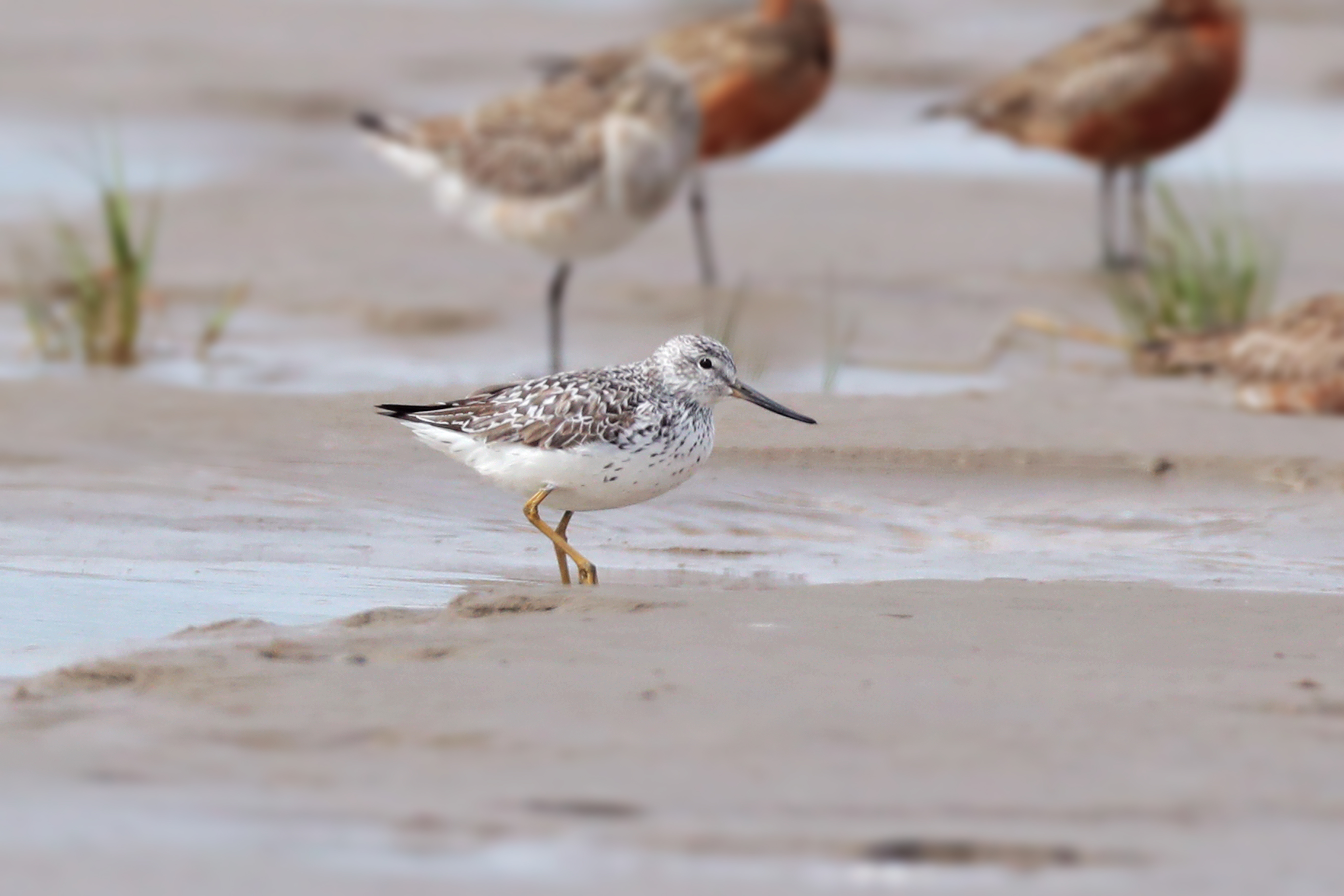
Since its establishment in 2020, TZN720 high tide roost site has supported 56800 waterbirds, and has been growing year by year. As of 2024, up to 189000 waterbirds roosted here, with Nordmann's Greenshank (EN), increasing from 1150 in 2020 to over 2000 in 2024, which has always been the largest single NG flock in the world, providing crucial data for the population estimation. The successful experience gained from the restoration and management of TZN720 has been included in the "Biodiversity 100+Cases" released at the 15th Conference of the Parties to the Convention on Biological Diversity (CBD-COP15) NGO Forum. It is also a famous Chinese sample of World Natural Heritage protection, frequently reported by many well-known Chinese media and attracting a large number of the public. It has been included in the Collated Guidance for the Restoration and Management of Salt Marshes and Interfacial Flats: an Evidence-based Approach compiled by the Conservation Evidence group at the University of Cambridge and Wetlands International. Meanwhile, we tested the effectiveness and performance of the waterbird automatic auxiliary monitoring framework at TZN720, and the results showed that our method is superior to many other popular deep learning algorithms. This algorithm can be used by protected area management departments or other organizations, which will contribute to wildlife conservation.
Beneficiaries
Research institutions, protected area management agencies, central government, local government, media, tourists, local service industry practitioners
Additionally, explain the scalability potential of your Solution. Can it be replicated or expanded to other regions or ecosystem?
Due to the widespread use of intertidal reclamation in the EAAF, there are a large number of important bird habitats in densely populated and rapidly developing coastal areas that require such restoration projects. Therefore, the successful experience of artificially creating high-quality waterbird high tide roost site can be extended to the entire coastal areas of China, East Asia, Southeast Asia, and other regions around the world facing similar challenges. Meanwhile, the automatic auxiliary identification and monitoring framework for waterbirds developed in this project can also be applied to the management of various types of waterbird habitats.
Global Biodiversity Framework (GBF)
GBF Target 1 – Plan and Manage all Areas To Reduce Biodiversity Loss
GBF Target 2 – Restore 30% of all Degraded Ecosystems
GBF Target 3 – Conserve 30% of Land, Waters and Seas
GBF Target 4 – Halt Species Extinction, Protect Genetic Diversity, and Manage Human-Wildlife Conflicts
GBF Target 10 – Enhance Biodiversity and Sustainability in Agriculture, Aquaculture, Fisheries, and Forestry
GBF Target 14 – Integrate Biodiversity in Decision-Making at Every Level
GBF Target 20 – Strengthen Capacity-Building, Technology Transfer, and Scientific and Technical Cooperation for Biodiversity
GBF Target 21 – Ensure That Knowledge Is Available and Accessible To Guide Biodiversity Action
GBF Target 22 – Ensure Participation in Decision-Making and Access to Justice and Information Related to Biodiversity for all
GBF Target 23 – Ensure Gender Equality and a Gender-Responsive Approach for Biodiversity Action
Sustainable Development Goals
SDG 15 – Life on land
Story
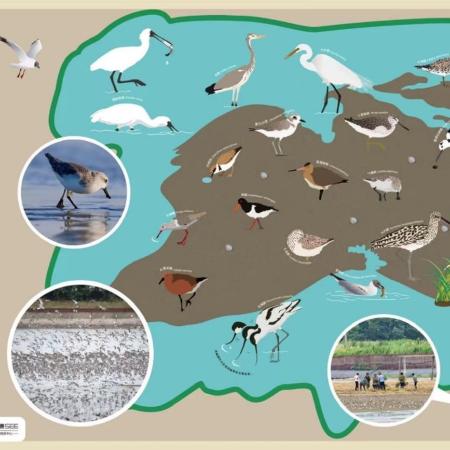
Tiaozini 720 High-tidal roost restoration
Mangrove Conservation foundation
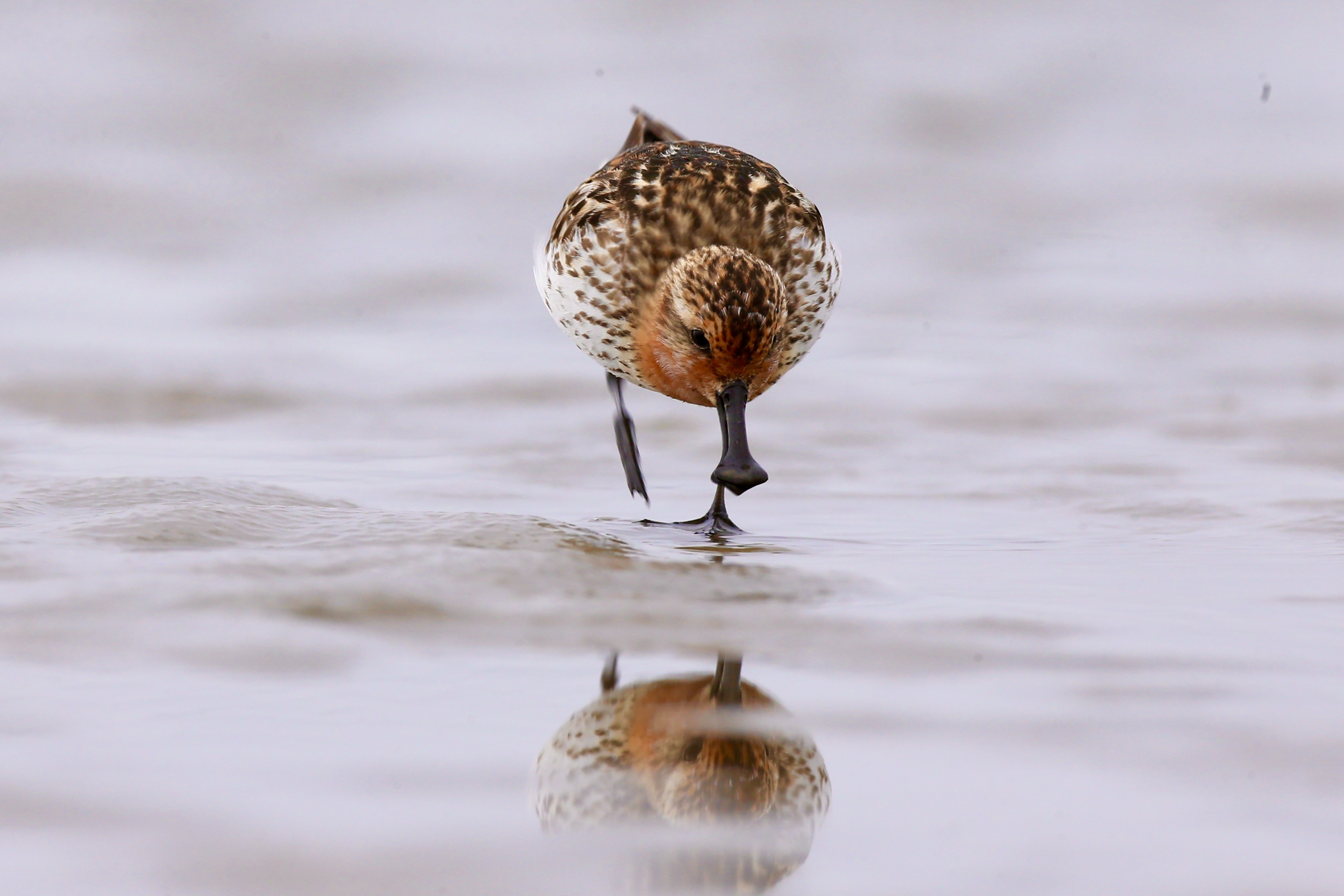
My name is Hongyan Yang, a PhD of Ornithology. I used to worked for more than 10 years on shorebirds, especially Red Knots, in Bohai Bay, northern Yeallow Sea Ecoregion, China. I'm a researcher working at CEAAF since 2020. I joined the center in August 2020, when the TZN720 high tide roost site was just created. My first job was to count the waterbirds in TZN720 once half a month. It's really astonishing comparing my northern Yellow Sea shorebird experience. In that summer I witnessed tens of thousands of shorebirds squeezed in the TZN720, including 20+ Spoon-billed Sandpipers at one time, happily roosted on the dry bare flats or even feeding in the shallow water! Some of then even kept their breeding plumage, such lovely and beautiful creatures! Be honesty, SBS occurred in my study site in Bohai Bay occasionally, but I never had the chance to see them. But, in Tiaozini, wow, I could meet them in almost every survey during their peak period staging in Tiaozini Wetland, especially in TZN720. You may know that TZN is the most important staging site in the world for this incredible precious species. Luck me! The number of SBS was quite stable in TZN, but the rising trends of other two protected species, Nordmann's Greenshank and Great Knot, really opened my eyes. In TZN720, I personally counted 1450 in 2023 and more than 2000 in 2024! Note that the previous population estimation of this species is just around 1000 individuals. Almost every autumn our team got the new highest NG numbers in the world during TZN720 survey! It's just so amazing and satisfying to witness such large number of this endangered species. God bless this land! In terms of Great Knot, I was very familiar with them because back in Bohai Bay I normally had more than 10000 of them in the peak time during their northward migration. But TZN720 once again shocked me: I counted more than 40000 GN in 2023, which, I heard, was already the most densely recorded group in China, but in 2024, guess how many I counted in TZN720? Double!!! Trust me, I really felt like my eyes were going blind because of counting them, with other 70000 even smaller shorebirds, most of them were sand plovers, Dunlin and Red-necked Stint. So, you see, it's so obvious and no doubt that I love this land, I love TZN720, I love those massive shorebirds clouded the sky in front of my eyes. It made me felt that the heaven truly descends into the world.