
One of the recurring challenges in large, regional projects is ensuring that knowledge remains accessible after the projects end. Years of field-tested experience, community engagement strategies and technical approaches are often captured in reports, but these documents rarely travel beyond the immediate project networks. When partners change, websites go offline or institutional memory shifts, valuable lessons risk disappearing. For the Alliance for the Restoration of Forest Landscapes and Ecosystems in Africa (AREECA), this was a central concern from the very beginning.
As the programme advanced, it became clear that AREECA needed a practical way to preserve the insights emerging from work in Cameroon, Kenya, Malawi and Rwanda. The goal was not simply to collect stories, but to create an accessible resource that practitioners, policymakers and partner organisations could use long after the initiative concludes. PANORAMA emerged as the most effective solution. Its structured format allowed AREECA teams to translate complex processes into concise, actionable “solutions” that highlight what works, under which conditions, and why.
What makes PANORAMA especially valuable is its openness. The platform does not sit behind institutional barriers, it is freely available to anyone with an interest in restoration or sustainable land management. From AREECA’s perspective, PANORAMA provides continuity. It provides a stable home for lessons learned, enables project teams to clearly communicate impacts, and supports partners in showcasing their work to an international audience.
And AREECA is not the only initiative choosing this route. The Restoration Initiative (TRI) as well as the Forests4Future (F4F) programme have also documented many of their practices on PANORAMA, creating another public repository of dryland restoration, governance structures and field-tested methods. Together, these examples illustrate how global programmes are beginning to rethink knowledge management, not as a final reporting task, but as an ongoing responsibility to the wider restoration community.
As countries across Africa scale up their restoration ambitions, the need for grounded, practical examples becomes increasingly urgent. By contributing to PANORAMA, initiatives like AREECA and TRI help ensure that proven approaches remain available and continue guiding practitioners around the world. In this way, the platform not only preserves institutional memory but also strengthens the collective capacity of the global restoration movement.
Some AREECA solutions on PANORAMA:
- Afforestation des forêts sacrées au Cameroun : Protéger le patrimoine écologique et culturel avec semences et sauvageons locales
- Multi-Stakeholder Engagement for Improved Management of the Mvai Forest Reserve in Ntcheu District, Malawi
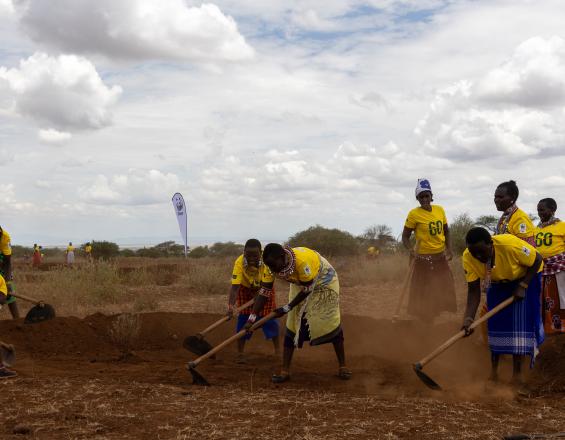
- Implementing FLR in wildlife-coupled systems using Pastoralist Managed Natural Regeneration (PMNR) techniques
- From bare to cover: Kasale Community roll up sleeves to dress up the deforested Mvai Forest Reserve
Some TRI and F4F solutions:
- Strengthening and Implementing National and Provincial FLR Policies and Legal Frameworks to Maximize Sustainable Land Management in Chilgoza Forest Ecosystem | PANORAMA
- Green Growth through Bamboo: Empowering Communities for Economic and Environmental Resilience | PANORAMA
- Enhancing Tanzania’s Enabling Environment for Sustainable Landscape Restoration