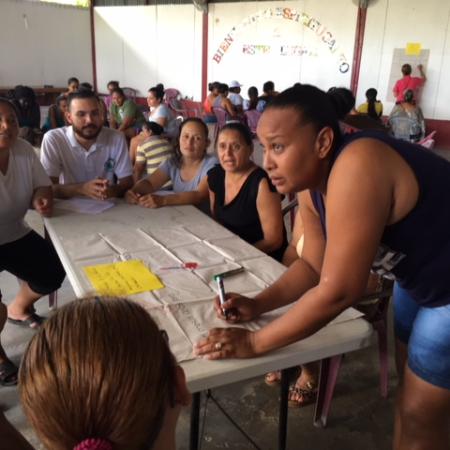
Women peelers from Barra del Colorado share their experience
CoopeSoliDar R.L,2016

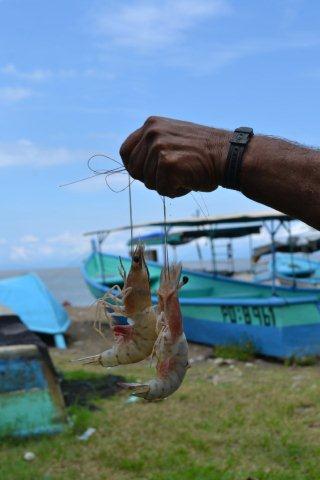
The network of responsible fishing marine areas is the union of different marine territories under a form of shared governance in both the Pacific and the Costa Rican Caribbean. Through this network, fishermen and fisherwomen from all over Costa Rica actively participate in decision making regarding responsible fishing and poverty eradication in coastal-marine areas. The Network promotes collective learning action and seeks forms of marine conservation based on respect for human rights.
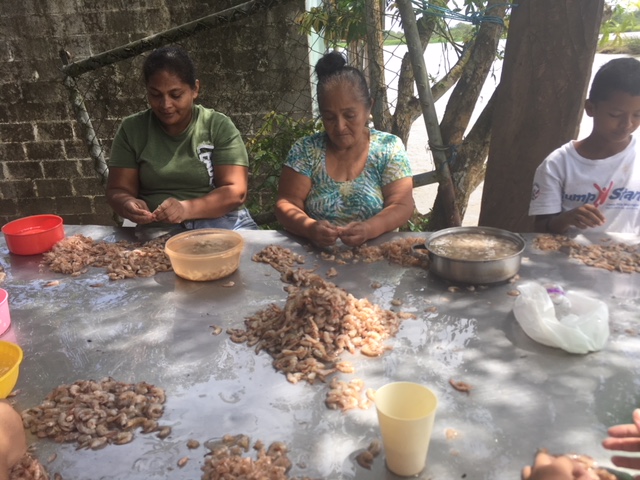
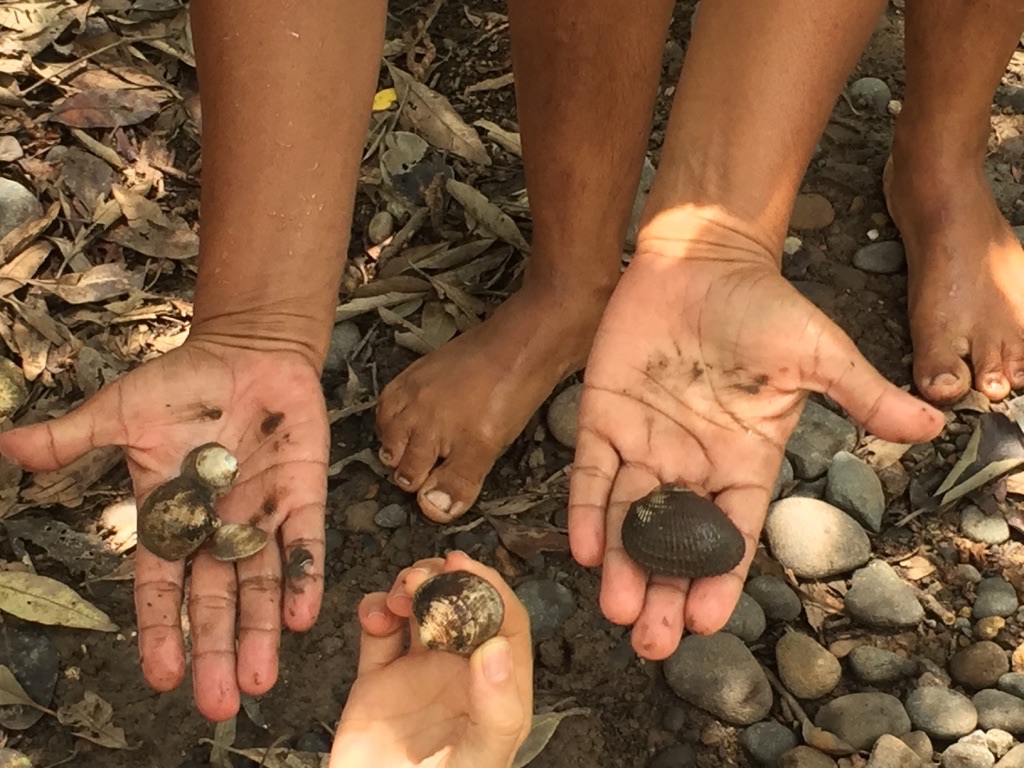

Recognition of other forms of governance such as shared governance in the system of marine protected areas.
Recognition of traditional knowledge as fundamental to integrate with scientific knowledge.
Greater accompaniment of these efforts by government institutions.
Human rights are the basis for marine conservation that achieves the three objectives of the Convention on Biological Diversity: conservation, sustainable use and fair and equitable sharing of benefits derived from marine biodiversity. Only with human welfare and strengthening of human capacities of the most vulnerable sectors will we achieve marine conservation, these are the people of the sea. Respect for human rights in marine conservation and the achievement of equity and justice in the treatment of the differences that exist between people in the same sector, undoubtedly allows artisanal fishing to be recognized and valued in the context of food security and poverty eradication.
The Network discusses the main obstacles to the fulfillment of fundamental human rights in coastal-marine communities. Issues such as land tenure, the fundamental right to water and food, and access to fisheries are fundamental to the implementation of the Voluntary Guidelines for the Sustainability of Small-scale Fisheries in the Context of Food Security and Poverty Eradication, a tool assumed by the country for its prompt and fair implementation.
The needs of this sector are known and analyzed in terms of promoting change.
A holistic vision of environmental, social and economic issues is being advanced, where the fundamental rights of the communities, such as their cultural identity, land tenure and access to the use of marine resources, among others, are taken into account.
Active participation of youth and women
Progress is being made towards sustainable use
Shared governance and knowledge sharing between fishermen and technical sectors are elements that favor conservation and human welfare and make fishermen better prepared in their struggle for the defense of their human rights.
It is important to search for innovative forms of participation of the fishing sectors in marine conservation and the implementation of a vision of marine conservation that guarantees human rights.
There can be NO marine conservation without respect for fundamental human rights.
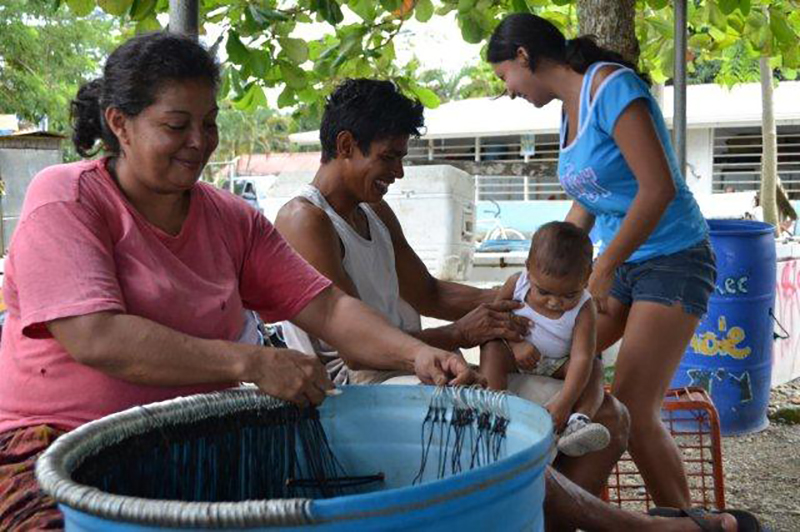
The process makes it possible to address problem solving from the poorest and most vulnerable sectors and to give a voice to the voiceless. The process develops tools that allow a better distribution of benefits to the most vulnerable sectors. The role of women and young people in the value chain of small-scale fisheries is clearly strengthened. The strengthening of and spaces for learning-by-doing among fisherwomen and the discussion on access and rights to the benefits derived from fishing under equal conditions has been fundamental. The agenda of women from rivers, seas, lakes and lagoons is being developed with 4 strategic axes: health, economic empowerment, decent work and sustainable use.
Participation of women and youth
Capacity building for vulnerable sectors.
Shared decision making with the state
Even within the same sector, such as the artisanal fishing sector, there are more marginalized and vulnerable sectors.
Women require greater support to be able to participate on equal terms and their contributions are important throughout the value chain and in marine conservation.
Young fishermen have an enormous potential to participate with their vision in marine conservation and development in their communities.
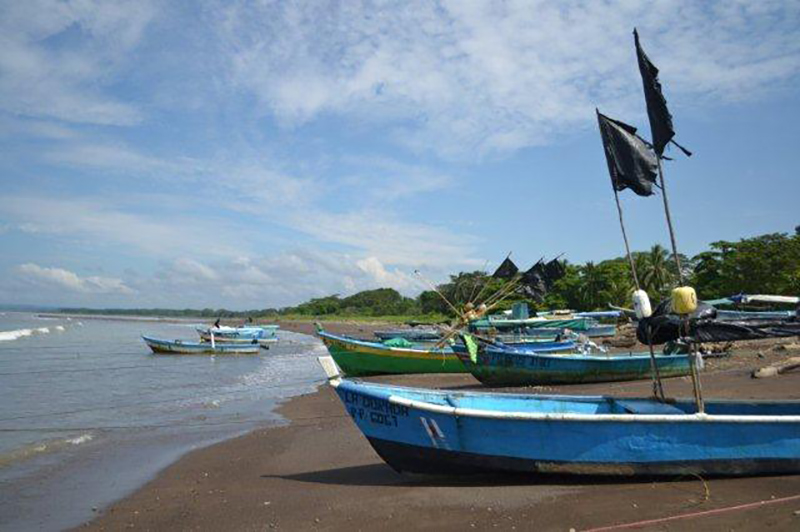
The network of marine areas of responsible fishing today brings together more than 11 marine territorial areas and 2 in the process of being recognized, which provide protection to marine species through a responsible fishing effort. The areas protect biodiversity in the Pacific and Caribbean of Costa Rica. Citizen science and participatory research exercises have been developed that demonstrate the biological benefits of these types of marine areas under shared governance models.
Union between marine territories and responsible fishing.
Definition of forms of shared governance for decision making.
Joint work plans
Best practices
Citizen science and participatory research
Integration of traditional and scientific knowledge
Marine conservation occurs with the broad participation of small-scale fishing stakeholders.
Without this participation, marine conservation will not be a reality; small-scale fishing is an enormous potential for marine conservation.
There are concrete examples where artisanal fishermen are a potential for conservation and not a threat, it is important to disseminate them.
Participatory research allows immediate actions to be taken in favor of marine ecosystems.
Recognition of traditional knowledge and community and shared forms of governance.
Dissemination and implementation of the Voluntary Guidelines for small-scale fisheries in the context of food security and poverty eradication.
Responsible fisheries and marine conservation
Fulfillment of global Sustainable Development goals. Innovative ways of learning for coastal-marine fishing communities.
Men and women fishermen
Young people from coastal-marine areas.
Small-scale fishing organizations.
Women and men fishermen and workers along the value chain of fishery products.
Indigenous and afro-descendant communities