
Sri Lanka’s National Sustainable Tourism Certification scheme: Promoting sustainable experiences, supporting conservation, and catalyzing biodiversity finance
Full Solution
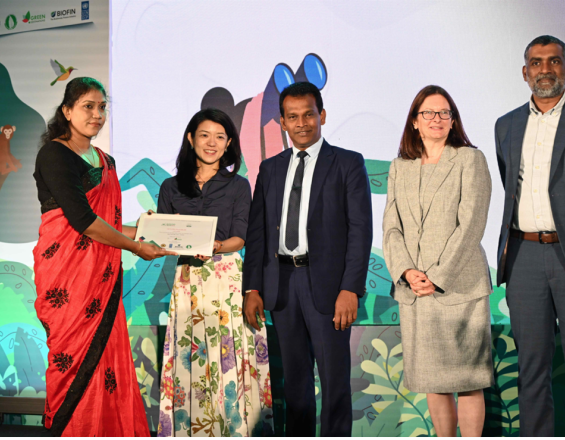
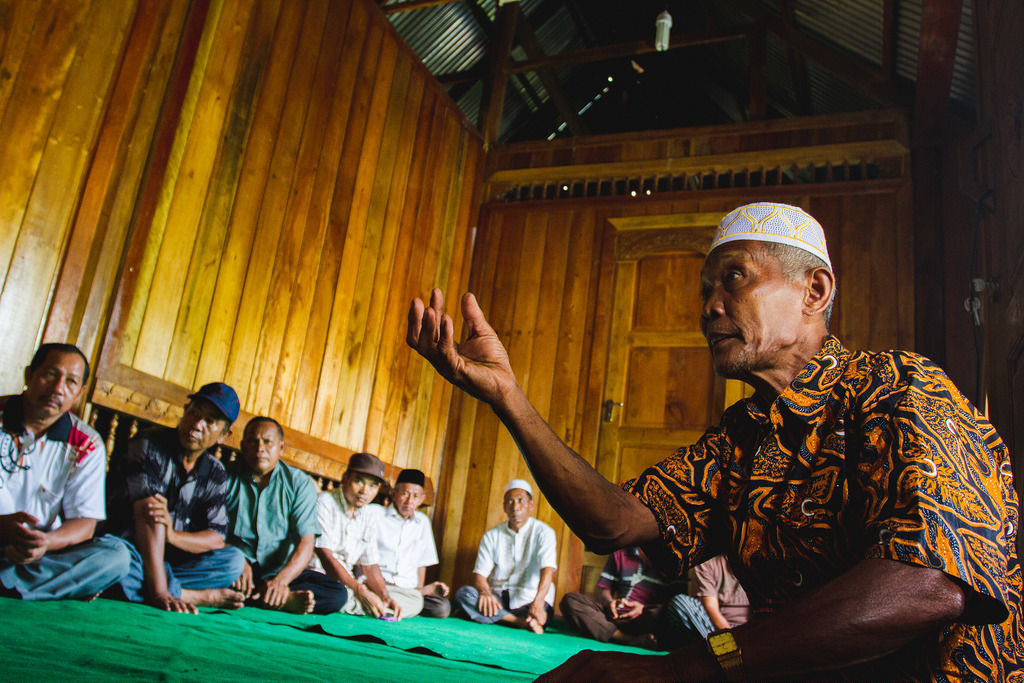
Sri Lanka Celebrates 100 SMEs for Leading the Way in Sustainable Tourism
UNDP Sri Lanka
Habitat degradation, pollution, and over-exploitation have threatened Sri Lanka’s rich biodiversity, which contains high levels of endemism. Moreover, an economic crisis that began in 2019 made it challenging to increase public funding for biodiversity. The COVID-19 pandemic aggravated this situation and added pressure to the livelihoods of those dependent on tourism.
While unplanned tourism expansion can be detrimental to biodiversity, the sector is also a source of opportunities for long-term conservation and local income generation. The Sri Lanka Tourism Development Authority (SLTDA), the United Nations Development Programme (UNDP)’s Biodiversity Finance Initiative (BIOFIN), and other partners developed a National Sustainable Tourism Certification scheme to promote biodiversity conservation and support economic recovery.
As of June 2025, 37 hotels, one destination, and 204 small and medium enterprises were certified. BIOFIN estimates that this initiative has catalyzed USD 4.026 million in investments for biodiversity.
Last update: 06 Jan 2026
51 Views
Photo and video gallery



Context
Challenges addressed
Habitat degradation, invasive alien species, pollution, and over-exploitation are among the drivers of biodiversity loss in Sri Lanka. Insufficient investment in biodiversity adds pressure to this situation. BIOFIN estimates that biodiversity finance in the country should have increased by USD 182 million to meet conservation needs between 2018 and 2024. However, biodiversity finance in Sri Lanka has been mainly public, through national budget allocations, and a severe economic crisis from 2019 onwards has tightened the fiscal space.
The private sector, including the tourism industry, can play a key role not only in mobilizing additional resources for conservation, but also in realigning current activities with nature-positive outcomes, reducing its pressure on biodiversity and avoiding future restoration needs. Tourism — which contributed to nearly 5% of Sri Lanka’s gross domestic product before COVID-19 — was severely affected by the pandemic, harming the local livelihoods that depend on it.
Location
Sri Lanka
South Asia
Process
Summary of the process
The development of Sri Lanka’s National Sustainable Tourism Certification began with the necessary steps to ensure an effective and internationally recognized scheme. For this, a memorandum of understanding was signed with the Global Sustainable Tourism Council (GSTC), an international accreditation body for sustainable tourism. Following a training for public authorities in Sri Lanka with GSTC's international trainers, the country developed its own certification scheme, initially only for accommodations. The certification was later expanded to include sustainably managed destinations, tour operators, and small and medium enterprises providing tourism services. A Sustainable Tourism Unit was also established to manage the certification scheme and other related projects, ensuring their institutionalization and long-term sustainability. Lastly, ongoing trainings and workshops have further strengthened the capacity of public servants to implement the certification scheme and have raised awareness of its benefits within the tourism industry.
Building Blocks
Collaboration with the Global Sustainable Tourism Council (GSTC): Adapting guidelines and training local staff to develop an effective and internationally recognized certification scheme
The Sri Lanka Tourism Development Authority (SLTDA), BIOFIN, and other partners began collaborating in 2018 to develop a national sustainable tourism certification scheme. During the planning phase, they identified the importance of designing a scheme that follows international certification standards to help ensure effectiveness and credibility among tourists and partners.
A memorandum of understanding (MoU) was signed with the Global Sustainable Tourism Council (GSTC), an independent international organization that promotes sustainable tourism global standards and serves as an accreditation body. The collaboration with the GSTC focused on adapting their international guidelines for Sri Lanka.
As there were no accredited auditors for the GSTC certification process within Sri Lanka, GSTC trainers conducted a four-day training program for 42 officers from the Ministry of Tourism, the Sri Lanka Tourism Promotion Bureau, the University of Colombo, the Sri Lanka Institute of Tourism and Hotel Management, the Tourism Development Authority, and provincial councils. This enabled the development of local auditing capacities, significantly reducing certification costs. Some of the trainees of this programme are now working as international sustainability auditors with private companies.
Enabling factors
- Collaboration between stakeholders, especially the Global Sustainable Tourism Council.
- Funding for training activities.
- Willingness of national stakeholders to design the certification scheme in line with global practices, understanding the importance and benefits of this process.
Lesson learned
- Developing a sustainable tourism certification scheme based on international practices and guidelines is fundamental. This ensures that both national and international audiences trust the certification and that intended benefits are fully achieved, such as the attraction of new tourists interested in sustainable experiences.
The certification scheme: Sri Lanka’s National Sustainable Tourism Certification

Following the knowledge transfer process described in Building Block 1, Sri Lanka launched its own National Sustainable Tourism Certification (NSTC) scheme, which includes the following certifications (and their respective years of creation):
- Sustainable Accommodation (2019)
- Sustainable Tourism Destination Management (2020)
- Sustainable Tour Operators (2021)
- Sustainable Small and Medium Enterprises (SMEs) in the Tourism Sector (2023).
Although the specific steps for obtaining the certification vary by type, the application process generally begins with the submission of a self-assessment form, along with supporting documents to verify compliance with sustainable tourism requirements. The Sri Lanka Tourism Development Authority reviews the form, documents and may also hold consultations to address additional questions. This review stage is followed by on-site visits and, finally, an audit report is prepared and submitted to the evaluation committee. Based on the grade assigned, the certification is issued. Valid for two years, it is necessary to renew the certification after this period.
This rigorous process ensures that the certification covers different components of sustainability, recognizing enterprises that use biodiversity responsively, reduce environmental impacts, and promote nature-positive practices.
Enabling factors
- Government support and commitment to developing the certification scheme.
- Interest and demand from companies, tour operators, hotels, and other actors in the tourism industry.
- Funding to support the development and implementation of the certification scheme.
Lesson learned
- Demand for the small and medium enterprises (SMEs) certification was low at the beginning, possibly due to limited awareness of its benefits relative to the required investments. However, demand significantly increased following awareness workshops and a certificate awarding ceremony, which celebrated and showcased certified SMEs. Therefore, public, high-engagement events that attract media attention and highlight those that have successfully completed the certification process can serve as an effective tool to attract new companies for certification.
- The rigorous certification process — which includes on-site visits to verify sustainable practices and renewal every two years — encourages hotels, tour operators, and other service providers to mitigate activities that harm biodiversity and adopt environmentally friendly and socially responsible practices, from infrastructure and waste management to the way tours are conducted. Therefore, the certification promotes a shift toward a nature-based economy within the tourism sector, realigning financial flows with practices that help conserve biodiversity and reduce future restoration costs.
Establishing a Sustainable Tourism Unit (STU) to strengthen the institutionalization of the certification scheme

Beyond launching the certification scheme, it is essential to establish a dedicated governance body, assign personnel, and develop a work plan to ensure its effective implementation and ongoing monitoring, leading to the institutionalization of the certification process.
To this end, BIOFIN supported the creation of a Sustainable Tourism Unit (STU) within the Sri Lanka Tourism Development Authority (SLTDA), along with the development of a two-year work plan. The STU’s physical office was inaugurated in January 2023.
The STU serves as the national focal point responsible for designing, implementing, monitoring, and coordinating all sustainable tourism activities in Sri Lanka, including the certification scheme.
Aligned with the National Tourism Policy, the unit has strengthened coordination between the public and private sectors. The STU’s clear mandate and dedicated staff enhanced the government’s ability to form partnerships and secure funding for the certification and other sustainable tourism initiatives. STU became the first contact point for national and international organizations, and partners seeking to collaborate. BIOFIN also supported the Sri Lanka Tourism Development Authority to report on the progress toward achieving the Sustainable Development Goals (SDGs).
Enabling factors
- Effective advocacy and willingness of the Sri Lanka Tourism Development Authority and other government bodies to promote sustainable tourism in Sri Lanka through a dedicated agency.
- Funding for the operation of the Sustainable Tourism Unit.
Lesson learned
- Ensuring institutionalization is essential for the long-term sustainability of initiatives such as the certification scheme.
- Establishing a dedicated unit for sustainable tourism has additional benefits beyond implementation of a single initiative, such as increasing visibility within the country and facilitating fundraising and partnerships.
Ongoing trainings and workshops to build capacity and raise awareness about the certification scheme

With support from BIOFIN and the University of Colombo, trainings and workshops have been provided yearly to raise awareness on sustainable tourism and the certification process among those in the industry, and to strengthen government capacity to implement the scheme. Some highlights include:
- Sri Lanka Tourism Policy Special Workshop: Brought together 43 government officials and industry representatives to promote sustainable tourism initiatives in Sri Lanka.
- Three-week training program for national- and provincial-level government officials on sustainable tourism certification: Brought together 33 officials in sustainable tourism agencies to promote the effective implementation of sustainable tourism initiatives at the provincial level, following the National Tourism Policy. The program included classroom sessions and field assignments. It was co-financed by the European Union, UNDP’s Transforming Tourism Project, and the Tourism Development Authority, in addition to receiving technical support from the University of Colombo.
- 19 workshops in key tourism attractions: Brought together 1,039 participants to promote the SMEs certification.
- Sustainable Destination Management Certificate course: Offered by the University of Colombo and designed with BIOFIN’s support. 13 students attended the first cohort in 2023.
Enabling factors
- Continuous funding for workshops and training activities.
- Interest and engagement from the tourism industry and public servants.
Lesson learned
- To be successful, sustainable tourism certifications and other voluntary schemes depend not only on their development by the government, but also on close coordination with the industry and adherence by those who are the target of the certification. Ensuring that these stakeholders are aware of the certification and clearly understand its associated benefits and costs is fundamental to increasing demand. Well-designed and ongoing awareness-raising campaigns and events can be an effective strategy towards this goal.
Impacts
As of June 2025, 37 hotels, one destination (Sigiriya), and 204 small and medium enterprises received Sri Lanka’s National Sustainable Tourism Certification.
The certification contributes to biodiversity conservation and finance by 1) realigning expenditures with nature-positive outcomes, 2) avoiding future restoration costs through sustainable practices, and 3) mobilizing new investments.
Certified businesses must invest in adapting their practices and installations to become environmentally and socially responsible. Examples include managing waste in accommodations and tours, efficiently using water and energy, and providing jobs to local communities. Tourists who purchase certified services support funding the sustainable use of biodiversity and related conservation practices. Renewal of the certification every two years ensures the maintenance of these practices, while the certification itself provides a marketing advantage that encourages more businesses to become certified.
Moreover, nine tourism locations in Sri Lanka developed sustainable management plans as an initial step to get certified. These detailed plans facilitate the mobilization of investments from public and private actors for sustainable tourism infrastructure, installations, and services, attracting more nature-positive resources.
Altogether, BIOFIN estimates that the scheme has catalyzed USD 4.026 million in investments in biodiversity.
Beneficiaries
- Sri Lanka’s biodiversity and ecosystems.
- Sri Lanka’s citizens.
- Public servants and the tourism industry.
- National and international tourists.
Global Biodiversity Framework (GBF)
GBF Target 1 – Plan and Manage all Areas To Reduce Biodiversity Loss
GBF Target 3 – Conserve 30% of Land, Waters and Seas
GBF Target 11 – Restore, Maintain and Enhance Nature’s Contributions to People
GBF Target 14 – Integrate Biodiversity in Decision-Making at Every Level
GBF Target 15 – Businesses Assess, Disclose and Reduce Biodiversity-Related Risks and Negative Impacts
GBF Target 19 – Mobilize $200 Billion per Year for Biodiversity From all Sources, Including $30 Billion Through International Finance
GBF Target 20 – Strengthen Capacity-Building, Technology Transfer, and Scientific and Technical Cooperation for Biodiversity
Sustainable Development Goals
SDG 8 – Decent work and economic growth
SDG 9 – Industry, innovation and infrastructure
SDG 11 – Sustainable cities and communities
SDG 13 – Climate action
SDG 14 – Life below water
SDG 15 – Life on land
SDG 17 – Partnerships for the goals