The +Mujeres +Natura (+Women +Nature) Programme: Empowering women through access to nature-positive finance and participation in decision-making for biodiversity
Full Solution
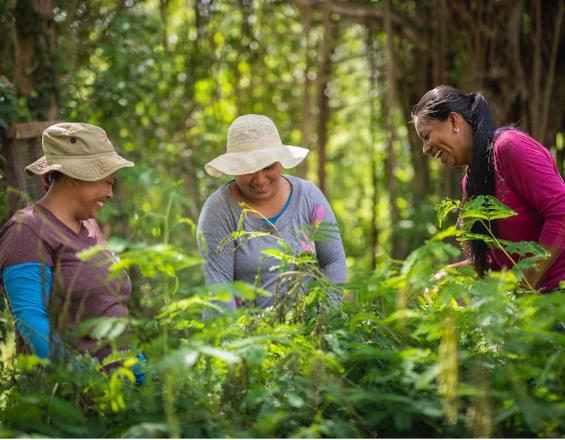
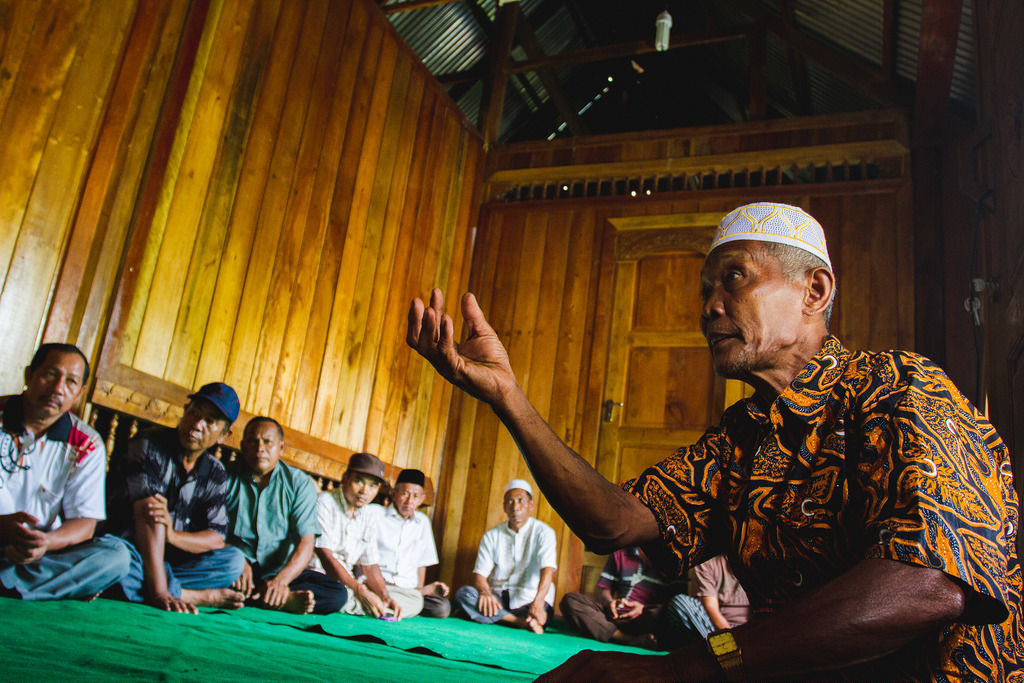
Women who participated in the +Women +Nature programme
UNDP Costa Rica
Women have a fundamental role in biodiversity conservation in Costa Rica and globally. However, gender-based barriers limit their access to biodiversity-related financial mechanisms, such as payments for environmental services and credit for sustainable agriculture and bio-businesses.
In 2020, the Ministry of Environment and Energy of Costa Rica (MINAE) and the Biodiversity Finance Imitative (BIOFIN) of the United Nations Development Programme (UNDP) launched the umbrella programme +Women +Nature to promote gender equality in biodiversity. Central to this initiative are three mechanisms to increase women’s access to finance, including two credit lines and one payment for environmental services scheme.
These mechanisms have strengthened women’s agency in conservation through USD 6,979,050 in credit lines and 530 payment for environmental services contracts, contributing to biodiversity conservation and inclusive economic development in Costa Rica.
Last update: 07 Jan 2026
38 Views
Photo and video gallery


Context
Challenges addressed
Costa Rica is a global biodiversity hotspot. The country has promoted notable conservation efforts, and its forest cover now exceeds 52% of the territory. Nonetheless, deforestation, ecosystem fragmentation, and other threats to biodiversity persist.
The sustainable use of forest resources, sustainable agriculture, and other nature-positive practices can foster conservation and improve local livelihoods. However, gender inequalities have limited women’s participation in these activities.
Only 15.6% of farm owners in Costa Rica are women (2014 Agriculture Census). Moreover, women signed just 15% of the payment for environmental services contracts from 1997 to 2021, and 73% of women farm workers do not receive remuneration (2019 Gender Action Plan for the REDD+ National Strategy). Women also face challenges in accessing credit due to the lack of land tenure and other typical requirements. Finally, COVID-19 exacerbated the socioeconomic challenges of already vulnerable populations, particularly rural women.
Location
Costa Rica
Central America
Process
Summary of the process
In the process of elaborating Costa Rica's National Biodiversity Strategy and Action Plan 2016-2025, gender-related institutional barriers in biodiversity conservation and access to finance were assessed, and the connections between them were analysed. Findings demonstrated the importance of developing initiatives that link biodiversity conservation with the sustainable use of resources and women's economic empowerment.
As a result, the umbrella programme +Women +Nature was launched in Costa Rica. It includes three financial mechanisms designed to support women working in biodiversity, enhancing their access to rural credit and to the national payment for environmental services scheme.
Moreover, +Women +Nature features a Gender Equality Seal to encourage the elimination of institutional gaps and barriers between men and women in the workplace, both in public institutions and in the private sector. Gender-responsiveness marks were also integrated into all financial solutions supported by BIOFIN in Costa Rica.
The Executive Directive on Gender Inclusion 005-2019 provides the legal framework to anchor these efforts, supporting their long-term sustainability.
Building Blocks
Assessing gender barriers in biodiversity conservation and related sectors, understanding the relationships between them, and including findings in public policy instruments
The elaboration of Costa Rica's National Biodiversity Strategy and Action Plan (NBSAP) 2016-2025 was novel in integrating a gender inclusion assessment and gender-sensitive goals.
The gender assessment involved an in-depth analysis of the institutional gaps and barriers for women's participation in environmental governance. This assessment provided inputs for the inclusion of gender-sensitive goals in the NBSAP. Findings also underpinned new programmes to reduce gender inequalities in biodiversity, including the +Women +Nature.
In addition, Costa Rica's National Policy for Effective Equality between Women and Men (PIEG) had not incorporated gender barriers in biodiversity. BIOFIN supported an inter-institutional cooperation framework to integrate the PIEG with the NBSAP process, with a focus on strengthening women's economic empowerment through the sustainable use of biodiversity. This cooperation was fundamental to understanding the relationship between gender institutional gaps in biodiversity and finance, providing a detailed needs assessment that served as the foundation for designing the +Women +Nature programme.
Enabling factors
- Willingness from key government departments and actors to assess gender-related institutional barriers in biodiversity conservation and finance, and to shift toward a coordinated approach to addressing these challenges.
Lesson learned
- Comprehensive needs assessments covering social, economic, and institutional aspects are essential for identifying the key challenges to be addressed, enabling the design of evidence-based and effective programmes.
Supporting national framework for gender inclusion in biodiversity-related sectors
Before the +Women +Nature programme was officially launched in 2020, BIOFIN supported Costa Rica's Ministry of Environment and Energy in developing the Executive Directive 005-2019, which aims to reduce gender gaps in biodiversity-related sectors (water, protected areas, and forests) and enhance women’s participation.
+Women +Nature was launched as a strategy to implement this directive — recognizing the linkages between gender-related institutional barriers, biodiversity conservation, and socioeconomic development — and to promote financial solutions that do not replicate these interconnected challenges.
Therefore, the directive provided an enabling framework for the development and implementation of the +Women +Nature programme, creating a favorable momentum by anchoring the initiative in a pre-existing legal directive. Furthermore, this approach supports the long-term sustainability of the programme beyond a specific government mandate.
Enabling factors
- Awareness and recognition of gender gaps and barriers within biodiversity-related sectors by the Ministry of Environment and Energy, along with its willingness to address these issues across different areas of work.
Lesson learned
- Establishing legal frameworks with clear objectives to address gender gaps in biodiversity conservation provides a foundation for mobilizing stakeholders, unlocking programmes, and ensuring their long-term sustainability beyond individual government mandates.
Financial mechanisms tailored for women
The programme includes three novel mechanisms to enhance women’s access to nature-positive finance, enabling their contribution to biodiversity conservation while strengthening their livelihoods.
Crédito Mujeres Natura (Women Natura Credit): Loans from USD 800 to 16,000, with an interest rate of 8-15% per year and a term of up to five years. It is targeted at women working in biodiversity. The credit line was developed by Fundecooperación para el Desarollo (Foundation for Development). Guarantees include mortgage, movable assets, pledges, fiduciary guarantees, or a guarantee from the Trust Fund of the National Institute for Social Welfare (FIDEMAS) for the population in poverty.
FONAFIFO a tu lado (at your side): Loans of up to USD 9,950 to women working in agriculture, with an interest rate of 4-7% per year and a term of up to 10 years. Funds can be used for working capital, equipment purchases, infrastructure, and innovative projects related to forest conservation and/or sustainable use. Mortgage, fiduciary, and organizational guarantees are accepted.
PSA Mujeres de FONAFIFO (PSE Women): Launched to increase women’s participation in the national payment for environmental services programme. Women applicants receive additional points, increasing their overall score and their likelihood of receiving compensations.
Enabling factors
- Availability of resources within national funds.
- Willingness from the government and relevant stakeholders to develop, implement, and fund these financial mechanisms.
Lesson learned
- Expanding women’s access to financial resources linked to their participation in biodiversity conservation promotes equity, economic empowerment, and sustainable livelihoods.
Strengthening women’s participation in decision-making related to biodiversity through intersectoral collaboration
In addition to supporting women’s access to credit, +Women +Nature also seeks to increase their participation in decision-making related to biodiversity, reducing gender gaps in the design of gender-responsive programmes.
As part of this process, a diagnosis of institutional gender gaps particularly within the National System of Conservation Areas (SINAC) and the National Commission for Biodiversity Management (CONAGEBIO) was concluded with support from UNDP BIOFIN and a Gender Action Plan for REDD+ was developed by the Forestry Financing Fund (FONAFIFO). The diagnosis process included workshops, consultations, and co-design events with public servants, women associations, park rangers, women producers, women forest fire fighters, and many more contributing to capacity-building and raising awareness on gender equality in biodiversity.
Later, an Interinstitutional Gender Equality Assessment for the Environment, Energy, Oceans, and Water Sectors was developed, including the SINAC, FONAFIFO, and CONAGEBIO. The National Institute of Women (INAMU) supported this process, with technical and financial assistance from BIOFIN. This work complemented ongoing efforts and enabled the INAMU and the Ministry of Environment and Energy (MINAE) to jointly develop a Gender Climate Action Plan, launched in 2023 with support from UNDP NDC programmes.
Enabling factors
- Stakeholders’ willingness to address gender gaps.
- Previous efforts and policies with similar objectives, such as the National Policy for Effective Equality between Women and Men (PIEG 2018-2030).
Lesson learned
- Gender analyses to identify gaps and non-inclusive practices are crucial to inform future plans and ensure evidence-based, effective and holistic actions that advance gender inclusion across biodiversity-related sectors.
- Fostering institutional change within biodiversity-related government agencies empowers women both directly, through their active participation in decision-making, and indirectly, through women’s agency in designing policies that reflect gender realities and effectively address existing gaps. This dual impact accelerates progress in closing gender gaps and strengthens compliance with gender equality commitments.
Recognizing and encouraging women’s participation in decision-making related to biodiversity through the Gender Equality Seal
The National Institute of Women of Costa Rica, with support from BIOFIN, also developed a Gender Equality Seal to recognize and encourage women's participation in decision-making related to biodiversity conservation.
The seal is a public policy instrument to encourage the elimination of gaps between men and women in the workplace, both in public institutions and in the private sector. It recognizes transformations in management models that integrate an intersectoral gender perspective in planning and budgeting procedures.
The seal is a local version of UNDP's internal Institutional Gender Gap Diagnosis, carried out with the Indic@Equality tool. It was adapted to follow Costa Rica's national certification standard 38G of the Institute of Technical Standards of Costa Rica.
Five institutions from the biodiversity conservation sector are included in this certification process: the National Commission for Biodiversity Management (CONAGEBIO), the Forest Financing Fund (FONAFIFO) and three protected areas of the National System of Conservation Areas (SINAC), namely: Cocos Marine Conservation Area (ACMC), Arenal Huetar Norte Conservation Area (ACAHN), and Central Pacific Conservation Area (ACOPAC).
Enabling factors
- Existing UNDP's internal Institutional Gender Gap Diagnosis and the Indic@Equality tool.
- Stakeholders' willingness to design and implement the seal.
- Technical support from BIOFIN.
Lesson learned
- Instruments that acknowledge and highlight successful initiatives driving change, such as seals and certifications, help inspire and encourage others to adapt their practices.
Comprehensive gender-responsive approach integrated into BIOFIN Costa Rica’s Strategic Programme
Finally, as an umbrella programme, +Women +Nature also features the integration of a gender-responsive approach to all biodiversity finance mechanisms implemented with BIOFIN's support in Costa Rica.
BIOFIN Costa Rica has provided advisory and technical assistance for implementing a portfolio of six financial solutions to meet and reduce the finance gap for nature. Women, indigenous territories, and rural communities have been prioritized in this process, acknowledged as frontline champions in catalyzing a new, nature-positive economy.
Financial solutions implemented with BIOFIN's support are marked on a scale of gender-responsiveness from 1 to 3 using UNDP's internal Institutional Gender Gap Diagnosis. The BIOFIN team monitors the amount of finance directed to gender-positive activities.
Enabling factors
- Results from the gender assessments explained in building blocks 1 and 4. These analyses identified gender-related institutional barriers in Costa Rica, providing evidence to support the design of gender-responsive financial solutions that effectively address these challenges.
Lesson learned
- Gender barriers in biodiversity conservation and socioeconomic development are closely linked. Therefore, financial mechanisms designed to simultaneously address both challenges can generate greater and more sustainable benefits.
Impacts
By 2024, the Crédito Mujeres Natura (Women Natura Credit) provided 268 credit contracts to rural women in biodiversity-positive activities, totalling USD 1,850,300.
Through the FONAFIFO a tu lado (at your side) credit line, USD 5,128,750 was allocated to women working with biodiversity via 373 credit contracts between 2020 and 2023 (latest available data).
Lastly, the payment for environmental services scheme PSA Mujeres (PSE Women) formalized 530 contracts with women between 2020 and 2023.
Access to finance and the reduction of gender-related institutional gaps and barriers enable women to lead conservation initiatives and strengthen nature-positive socioeconomic practices. Therefore, the +Women +Nature programme promotes women's economic development, biodiversity conservation, and gender inclusion in Costa Rica.
Beneficiaries
Direct beneficiaries are women in Costa Rica in the biodiversity related sectors. The whole population benefits from the positive environmental and socio-economic effects of this programme.
Global Biodiversity Framework (GBF)
GBF Target 3 – Conserve 30% of Land, Waters and Seas
GBF Target 8 – Minimize the Impacts of Climate Change on Biodiversity and Build Resilience
GBF Target 10 – Enhance Biodiversity and Sustainability in Agriculture, Aquaculture, Fisheries, and Forestry
GBF Target 11 – Restore, Maintain and Enhance Nature’s Contributions to People
GBF Target 14 – Integrate Biodiversity in Decision-Making at Every Level
GBF Target 19 – Mobilize $200 Billion per Year for Biodiversity From all Sources, Including $30 Billion Through International Finance
GBF Target 20 – Strengthen Capacity-Building, Technology Transfer, and Scientific and Technical Cooperation for Biodiversity
GBF Target 22 – Ensure Participation in Decision-Making and Access to Justice and Information Related to Biodiversity for all
GBF Target 23 – Ensure Gender Equality and a Gender-Responsive Approach for Biodiversity Action
Sustainable Development Goals
SDG 1 – No poverty
SDG 5 – Gender equality
SDG 8 – Decent work and economic growth
SDG 10 – Reduced inequalities
SDG 13 – Climate action
SDG 14 – Life below water
SDG 15 – Life on land
SDG 17 – Partnerships for the goals
Story

Elizabeth and Andrea
UNDP/2022/Simon Nazer
Elizabeth Ramirez Gonzalez and Andrea Rojas Cruz are two women from Costa Rica. When COVID-19 started, they were both out of work and very worried about their socioeconomic situation. They decided to start an online course on organic cosmetics. For Andrea, the course was an opportunity to make natural cosmetics for herself, since she noticed a challenge in finding these products in conventional shops. And for Elizabeth, who was a makeup artist, the course was an opportunity to improve the products she used.
However, the impact of the course went beyond learning. Elizabeth and Andrea met online during the virtual classes. As the only Costa Ricans in the course, Elizabeth reached out to Andrea, and together they started exploring ideas for creating products. After eight months, they founded Nyura, their own natural cosmetics company.
Elizabeth and Andrea started making boxes of products to sell in the 2021 Christmas season. With support from family and friends, they planned to expand their business but faced a major hurdle: accessing finance. After unsuccessfully applying for loans at several banks, they realized how difficult it is for women to secure credit. As Elizabeth shares, “banks are used to lending money to men […], it is difficult to get a loan from a bank because they’re not used to financing projects led by women”.
That was when Elizabeth and Andrea learned about the Women Nature Credit from the Foundation for Development, part of the +Women +Nature programme. Within a month of applying, they were able to access the funds. The credit allowed them to purchase packaging and marketing materials, making it possible to place their products in nine stores across Costa Rica. In Elizabeth’s words, “thanks to the help we’ve received, it’s been life-changing”.
Beyond supporting women's economic development, this financial mechanism delivers significant benefits for biodiversity. As Elizabeth explains, conventional cosmetics often generate a lot of waste that can pollute water and affect communities. By contrast, the sustainable use of natural cosmetics doesn’t harm nature and supports local livelihoods.
We invite you to read Elizabeth and Andrea’s full story in the following link.