Ceasing Harmful Coastal Construction Subsidies to Protect Biodiversity in the Surroundings of the Mrigadayavan Palace, Thailand
Full Solution

Restoration of Native Ecosystem and Coastal Dunes: Revival of the natural coastal sand dune system and native vegetation after the removal of hard infrastructure.
Mr. Chitiwat Pornprasert.
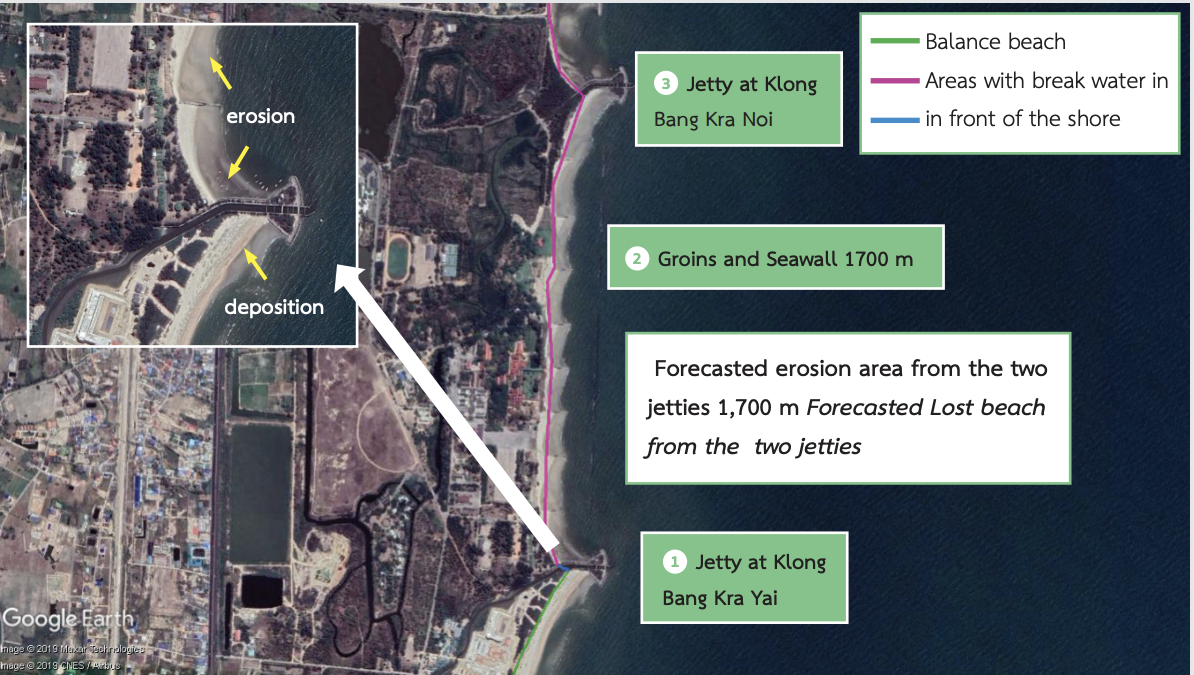
The Mrigadayavan Palace, built in 1924 between the beach towns of Cha-Am and Hua Hin, was the summer house of King Vajiravudh, who ruled until 1925. To prevent coastal erosion and protect this cultural landmark, The Marine Department of Thailand (Ministry of Transport) constructed groins, seawalls, and jetties along the beach near the palace. These rigid structures cost USD 8.4 million in subsidies.
National experts, partners, and the Biodiversity Finance Initiative (BIOFIN) of the United Nations Development Programme (UNDP) measured the impact of subsidies on ecosystems in Thailand. After the team found that rigid coastal structures had accelerated erosion instead of preventing it, they presented these results to the Department of Marine and Coastal Resources (Ministry of Natural Resources and Environment).
As a result, the Thai cabinet ceased subsidies for coastal rigid structures near the palace. Existing structures were replaced with nature-based solutions, restoring the ecosystem and protecting cultural heritage.
Last update: 06 Jan 2026
60 Views
Photo and video gallery


Context
Challenges addressed
After Typhoon Linda caused coastal erosion in Thailand in 1977, the government allocated subsidies for the construction of groins, seawalls, and jetties. Several of these coastal rigid structures were built near the Mrigadayavan Palace. However, they accelerated erosion rather than prevented it.
Wind and other weather conditions contribute to seasonal longshore drifts that would usually bring sand back to eroded areas. Nonetheless, the rigid structures obstructed this natural process. Consequently, continued erosion occurred behind groins and seawalls, while sand accumulated only on the side facing the current. This affected marine species and birds that lay eggs on sandy beaches. In addition, jetties built to control tides and channel seawater to planted mangroves caused the contamination of groundwater.
BIOFIN estimates that the Marine Department of the Ministry of Transport used USD 8.4 million in subsidies to build and maintain rigid structures near the Mrigadayavan Palace.
Location
Cha-am, Phetchaburi, Tailândia
Southeast Asia
Process
Summary of the process
The process of repurposing subsidies harmful to biodiversity in Thailand began with an assessment study to measure these impacts, identify the most harmful subsidies, and provide scientific evidence for policymakers. The study showed that coastal rigid structures had contributed to erosion, particularly along the beach near the Mrigadayavan Palace. This evidence supported an advocacy process that influenced policy change, resulting in a landmark decision by the Thai cabinet to cease subsidies for seawall construction projects and allocate funds for removing these structures and replacing them with nature-based solutions.
Building Blocks
Providing Evidence: Measuring the impacts of harmful subsidies on ecosystems in Thailand
Experts from the Prince of Songkhla University, BIOFIN, and other national partners conducted a study to measure the impact of harmful subsidies on ecosystems in Thailand.
This process included four key steps: identifying subsidies that harm biodiversity, validating the list of subsidies, developing redesign proposals for the three most significant subsidies, and aligning redesigned proposals with national priorities.
The study identified the following three subsidies as having the most significant impacts:
- Rigid constructions in river systems and wetlands.
- Rigid constructions on beaches and coastal areas.
- Lower land tax for private property areas classified as under use, which encourages the plantation of species that threaten original vegetation.
The research included consultations with the Departments of Public Works and Town & Country Planning, Water Resources, Royal Irrigation, and Marine, in addition to the Fiscal Policy Office, the Office of Natural Resources and Environmental Policy and Planning, and Senator Mr. Weerasak Kowsurat.
The study also presents five case studies detailing the impacts of harmful subsidies, including one focused on the coastal rigid structures near the Mrigadayavan Palace.
Enabling factors
- Technical support from local experts throughout the study.
- Strong willingness to collaborate from key governmental stakeholders and departments.
- Availability of financial resources and necessary equipment to measure impact and conduct the study.
Lesson learned
- Studies with advocacy potential, such as this assessment of harmful subsidies in Thailand, benefit from including clear case studies that make impacts easier to understand for the public, the government, and other stakeholders.
- It is useful to propose a structured action plan that combines short-term solutions for repurposing existing nature-negative subsidies with long-term strategies to prevent future ones, as this study also does.
Bridging Evidence and Action: Advocacy for repurposing harmful subsidies
The study described in building block 1 provided scientific evidence on the harmful impact of subsidies on biodiversity in Thailand. Still, this was only the first step in the process of driving change. It was equally important to share results with relevant policymakers and advocate for the reevaluation and redesign of financial practices that harm biodiversity.
National partners and BIOFIN presented the study's findings to the Marine and Coastal Resources Department of Thailand, under the Ministry of Natural Resources and Environment. Following this joint advocacy effort, the Thai cabinet made a significant decision to allocate USD 285,714 to the Marine Department of the Ministry of Transport for the removal of existing rigid coastal structures near the Mrigadayavan Palace. The cabinet also decided to cease further subsidies for similar infrastructure.
Enabling factors
- Multistakeholder collaboration led by the Department of Marine and Coastal Resources to repurpose harmful subsidies, ensuring coordinated action and participation from all necessary ministries and actors.
- Scientific evidence generated through a rigorous research process with local experts, providing reliable information to guide decision-making and to ensure that policy reevaluation and redesign effectively address existing needs.
Lesson learned
- Scientific evidence strengthens advocacy efforts to influence policy.
- Biodiversity finance includes not only mobilizing additional resources, but also repurposing existing expenditures that harm nature through the reevaluation and redesign of financial policies, achieving nature-positive outcomes.
Enabling Restoration: Removing rigid coastal structures

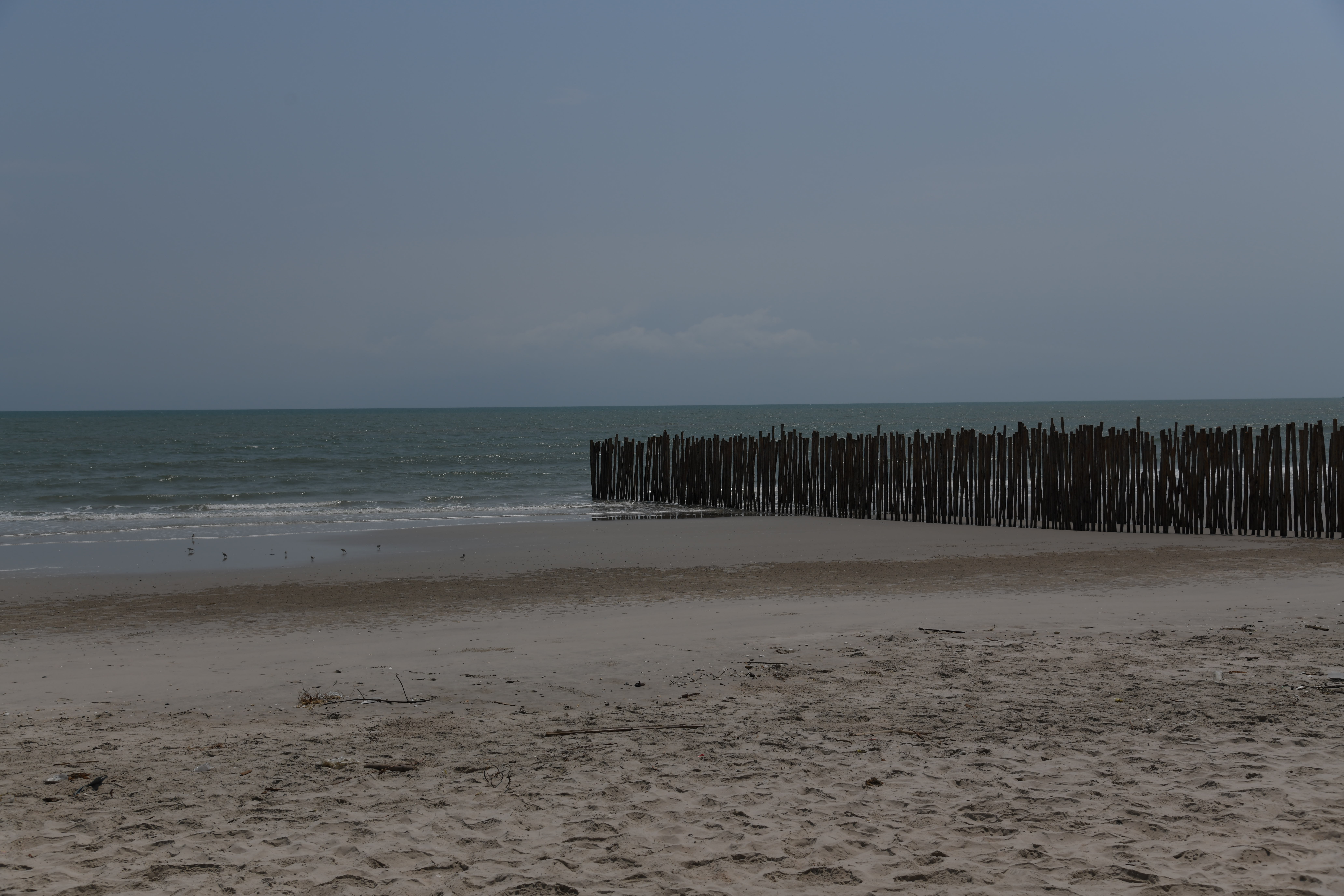
Following the Thai cabinet's decision to cease subsidies for coastal rigid structures, the Marine Department removed existing groins, seawalls, and jetties near the Mrigadayavan Palace, stopping ongoing erosion and enabling nature to recover.
In their place, a nature-based solution was implemented using sticks that mimic tree roots, arranged in a zigzag pattern with gaps between them. This structure dissipates wave energy from all directions, reducing coastal erosion, and allows for the natural movement and accumulation of water, sand, and sediments due to the zigzag configuration.
Enabling factors
- Political willingness to allocate resources for removing rigid coastal structures.
- Availability of funds for removal activities.
- Growing recognition of the value of nature-based solutions.
Lesson learned
- Efforts to repurpose harmful subsidies should also prioritize addressing the biodiversity damage they have already caused.
- Nature-based solutions are powerful tools to address challenges such as coastal erosion without harming natural habitats and ecosystems, thereby minimizing the risk of unintended damage.
- The construction of infrastructure harmful to biodiversity usually derives from a lack of awareness among government officials about these negative impacts. Therefore, raising awareness and sharing knowledge on this topic is crucial. To support this objective, the study explained in building block 1 included an action plan that combines short-term suggestions to repurpose nature-negative subsidies with long-term strategies to prevent future ones.
Impacts
The Thai cabinet ceased subsidies for coastal rigid structures near the Mrigadayavan Palace, which had already totaled USD 8.4 million. The cabinet also endorsed the allocation of USD 285,714 for the Marine Department to remove existing groins, seawalls, and jetties, and to implement a nature-based solution that mimics tree roots.
Sand has once again accumulated on the beach near the Mrigadayavan Palace, forming initial dunes, and native coastal grassland has naturally returned. Moreover, migratory birds that lay eggs on sandy beaches have reappeared at the site.
Beyond the area surrounding the Mrigadayavan Palace, the Department of Public Works and Town & Country Planning and the Marine Department stopped submitting budget requests for seawall construction projects across all Thai provinces. According to the Beach for Life group, these projects had received USD 308 million in subsidies since 2007.
Therefore, this initiative helps preserve the coastal surroundings of the Mrigadayavan Palace, restore biodiversity, and protect this important cultural heritage site.
Beneficiaries
- Thailand's biodiversity and ecosystems.
- The government benefits from the provision of scientific evidence on the impact of harmful subsidies.
- The broader population benefits from restored ecosystems and the services they provide.
Global Biodiversity Framework (GBF)
GBF Target 1 – Plan and Manage all Areas To Reduce Biodiversity Loss
GBF Target 2 – Restore 30% of all Degraded Ecosystems
GBF Target 3 – Conserve 30% of Land, Waters and Seas
GBF Target 11 – Restore, Maintain and Enhance Nature’s Contributions to People
GBF Target 18 – Reduce Harmful Incentives by at Least $500 Billion per Year, and Scale Up Positive Incentives for Biodiversity
GBF Target 20 – Strengthen Capacity-Building, Technology Transfer, and Scientific and Technical Cooperation for Biodiversity
GBF Target 21 – Ensure That Knowledge Is Available and Accessible To Guide Biodiversity Action
Sustainable Development Goals
SDG 11 – Sustainable cities and communities
SDG 14 – Life below water
SDG 15 – Life on land
SDG 17 – Partnerships for the goals
Connect with contributors



Other contributors
Ms. Klaomas Yipinsoi
Mrigadayavan Palace Foundation
Dr. Kitichate Sridith
Prince of Songkla University
Dr. Sara Bumrungsri
Prince of Songkla University
Dr. Sakanan Platong
Prince of Songkla University
Dr. Anond Snidvongs
Geo-Informatics and Space Technology Development Agency of Thailand
Mr. Sasin Chalermlarp
Sueb Foundation
Niran Nirannoot
UNDP BIOFIN