
Results-based budgeting in the Pak Kret City Municipality, Thailand: Integrating biodiversity targets into local government budgets
Full Solution
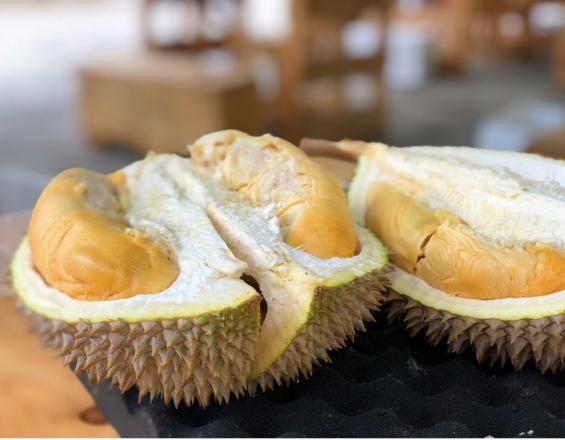
Durian Non
Jim Teo / Unsplash
Pak Kret City Municipality is located on the Chao Phraya River plain in Thailand, an area with fertile soil for agriculture. The subdistrict is home to 63 native durian varieties, a flavorful tropical fruit. However, unplanned urban expansion, pollution, and climate change have threatened urban biodiversity and agricultural activities in Pak Kret. Its proximity to Bangkok, only 20 kilometers away, intensifies these pressures.
Amid this situation, Pak Kret City Municipality, with support from the Biodiversity Finance Initiative (BIOFIN) of the United Nations Development Programme (UNDP), adopted results-based budgeting: an approach that integrates biodiversity targets into government budgets, thereby increasing nature-positive investments.
As a result, Pak Kret invested USD 11 million (THB 372 million) — 17% of its total budget — in biodiversity in 2025, reflecting priority concerns to protect its distinctive durian variety, expand green spaces, and enhance air quality, water, and waste management systems.
Last update: 06 Jan 2026
66 Views



Context
Challenges addressed
Forest encroachment, climate change, pollution, and unplanned urban expansion are among the drivers of biodiversity loss in Thailand. Particularly in Pak Kret City Municipality, these pressures have harmed urban biodiversity and threatened rare and native Durian species, a symbol of local agricultural and ecological heritage.
While the Thai National Biodiversity Strategy and Action Plan (NBSAP) addresses these challenges, local governments in Thailand have rarely integrated national biodiversity targets and goals into their budget frameworks — even though biodiversity investments usually occur at the local level, within the jurisdictions where ecosystems are located. This gap highlights the need for enhanced technical capacity to design and implement local budgets and financing strategies aligned with national biodiversity objectives.
Location
Pak Kret, Nonthaburi, Tailândia
Southeast Asia
Process
Summary of the process
Results-based budgeting is an approach to incorporate local, national, and global biodiversity targets into public budgets. The Global Biodiversity Expenditure (GLOBE) taxonomy was integrated into the results-based budgeting process in Pak Kret City Municipality as a tool to classify biodiversity-related expenditures in the local budget, ensuring that local actions align with national biodiversity targets. Technical assistance was crucial in enabling Pak Kret to adopt results-based budgeting and incorporate the GLOBLE taxonomy, providing expert guidance for this transformation of the local budgeting process.
Building Blocks
The Approach: Results-based budgeting
Results-based budgeting is an approach to move from activity-based to outcome-driven public budgets. Instead of listing activities and calculating their costs (e.g., salaries and equipment), results-based budgeting starts with the definition of results to be achieved, based on pre-established goals and targets. Then, these expected results determine a set of necessary activities and resources, leading to the calculation of financial needs and the determination of the public budget.
When results-based budgeting is used for biodiversity investments, the targets in the National Biodiversity Strategy and Action Plan (NBSAP) serve as the foundation for identifying expected results that guides budget allocations. This approach also facilitates the development of performance indicators to track progress, given its focus on achievements.
The Pak Kret City Municipality, with support from BIOFIN, implemented results-based budgeting for biodiversity, reflecting national targets within its own budget preparation — with a focus on fostering urban green spaces, reducing pollution, and conserving durian species.
Enabling factors
- BIOFIN’s technical support and expertise in implementing results-based budgeting.
- Public servants' awareness of the benefits of results-based budgeting and willingness to adapt their budgeting processes.
Lesson learned
Results-based budgeting for biodiversity offers multiple advantages:
- It fosters the effective use of available funds by associating expenditures to achievable targets.
- It simplifies financial needs estimation by deriving activities and resources from expected results.
- It helps attract investment by creating a pipeline for public investments that connects results, actions, and costs.
- It reduces negative biodiversity impacts by integrating biodiversity targets into the budgeting process.
- It strengthens transparency in public spending by facilitating monitoring and evaluation, since costs are tied to expected results.
In addition, adopting results-based budgeting particularly at the local level enhances the alignment between local and national efforts toward biodiversity conservation.
For a detailed explanation of these advantages, please refer to page 9 of BIOFIN's Results-Based Budgeting for biodiversity – A guidebook (link available at the end of this building block).
The Supporting Tool: Integrating the Global Biodiversity Expenditure (GLOBE) taxonomy into results-based budgeting
Results-based budgeting begins with the definition of expected results, followed by required activities and associated financial needs. This process facilitates linkages between specific activities and biodiversity outcomes. It is crucial to ensure that biodiversity-related expenditures are indeed contributing to national and global targets, and to measure the magnitude of this impact. A biodiversity expenditure taxonomy is a useful tool for this goal.
In 2024, BIOFIN launched the Global Biodiversity Expenditure (GLOBE) taxonomy. Biodiversity expenditures are those that have a positive impact on biodiversity or that reduce or eliminate pressures on it. A taxonomy is a classification system for these expenditures. With this tool, governments can classify their budget allocations into biodiversity categories and subcategories — evaluating which expenditures fit them, thereby contributing to biodiversity, and which ones do not. The taxonomy also includes attribution rates, from 0 to 100%, indicating the extent to which each expenditure contributes to biodiversity.
The Pak Kret City Municipality integrated the GLOBE taxonomy into the results-based budgeting process, using this tool to classify biodiversity-related expenditures in the local budget and ensure actions are aligned with national and global biodiversity targets.
Enabling factors
- Development of the Global Biodiversity Expenditure (GLOBE) taxonomy by the BIOFIN team.
- Support from BIOFIN to incorporate the GLOBE taxonomy into the results-based budgeting process in Pak Kret City Municipality.
Lesson learned
- The biodiversity expenditure taxonomy is a fundamental tool to classify public expenditures according to biodiversity categories, understanding which ones indeed contribute to biodiversity and what is the magnitude of this association. Therefore, the tool not only allows governments to define biodiversity expenditures during budget preparation, but also to review past expenditures and measure how much they contributed to positive biodiversity outcomes.
The Process: Technical assistance for results-based budgeting
The implementation of results-based budgeting in Pak Kret City Municipality is the result of a collaborative effort between the local government and BIOFIN.
BIOFIN and partners provided training and technical assistance on results-based budgeting and the GLOBE taxonomy for the Pak Kret City Municipality, facilitating the integration of biodiversity targets into the local budget. Trainings of trainers were also conducted to strengthen local technical capacity and ensure long-term sustainability, focusing on the inclusion of gender-responsive planning, climate adaptation, and local bioeconomy development into subnational budget systems.
The pilot experience in Pak Kret City Municipality is part of a larger strategy to foster results-based budgeting in all Thai local governments. The Department of Local Administration has worked closely with BIOFIN in conducting a survey, pre-training needs assessment, and training needs assessment workshops with local governments in Thailand to understand human resources capacity, available tools, and other enabling conditions for broader adoption of results-based budgeting. BIOFIN is also developing guidelines, curriculum training materials, and building capacity of potential trainers from local government units to foster the implementation of results-based budgeting across all Thai provinces.
Enabling factors
- Funding and experts available for technical assistance.
- Local governments' willingness to adopt results-based budgeting and, in particular, Pak Kret City Municipality’s efforts in piloting this initiative.
Lesson learned
- Countries have not yet widely adopted results-based budgeting for biodiversity. Therefore, it is essential to facilitate knowledge sharing about this approach and strengthen technical assistance at both national and subnational levels. Developing guidelines and training materials for results-based budgeting in Thailand is an effective strategy to achieve this goal.
Impacts
Following the adoption of results-based budgeting in Pak Kret, biodiversity investments in the local budget reached USD 11 million (THB 372 million) — or 17% — in 2025. While previous allocations averaged 15% of the budget, this recent increase underscores priority efforts to protect Pak Kret's distinctive durian variety, expand green spaces, and improve air quality, water, and waste management systems. This achievement demonstrates how strategic budget allocations can drive biodiversity conservation at the local government level.
The Association of Southeast Asian Nations (ASEAN)'s Working Group on Nature Conservation and Biodiversity acknowledged Thailand’s results-based budgeting model with local governments as an innovative and scalable mechanism for mobilizing biodiversity finance across the region.
In 2024, the Pak Kret City Municipality had already received the Environmentally Sustainable City award from ASEAN for its efforts in conserving durian orchids through results-based budgeting.
Beneficiaries
- Pak Kret City Municipality's government, with increased capacity on results-based budgeting for biodiversity.
- Pak Kret City Municipality’s residents, with better conserved urban biodiversity due to the adoption of results-based budgeting.
Global Biodiversity Framework (GBF)
GBF Target 2 – Restore 30% of all Degraded Ecosystems
GBF Target 3 – Conserve 30% of Land, Waters and Seas
GBF Target 7 – Reduce Pollution to Levels That Are Not Harmful to Biodiversity
GBF Target 8 – Minimize the Impacts of Climate Change on Biodiversity and Build Resilience
GBF Target 11 – Restore, Maintain and Enhance Nature’s Contributions to People
GBF Target 12 – Enhance Green Spaces and Urban Planning for Human Well-Being and Biodiversity
GBF Target 14 – Integrate Biodiversity in Decision-Making at Every Level
GBF Target 19 – Mobilize $200 Billion per Year for Biodiversity From all Sources, Including $30 Billion Through International Finance
GBF Target 20 – Strengthen Capacity-Building, Technology Transfer, and Scientific and Technical Cooperation for Biodiversity
GBF Target 21 – Ensure That Knowledge Is Available and Accessible To Guide Biodiversity Action
Sustainable Development Goals
SDG 10 – Reduced inequalities
SDG 11 – Sustainable cities and communities
SDG 13 – Climate action
SDG 15 – Life on land
SDG 17 – Partnerships for the goals
Connect with contributors



Other contributors
Niran Nirannoot
UNDP BIOFIN
Sornsawan Phongphao
UNDP BIOFIN
Anabelle Trinidad
UNDP BIOFIN