
First Payment for Environmental Services Scheme in Cuba: Promoting carbon removal through sustainable forest management
Full Solution

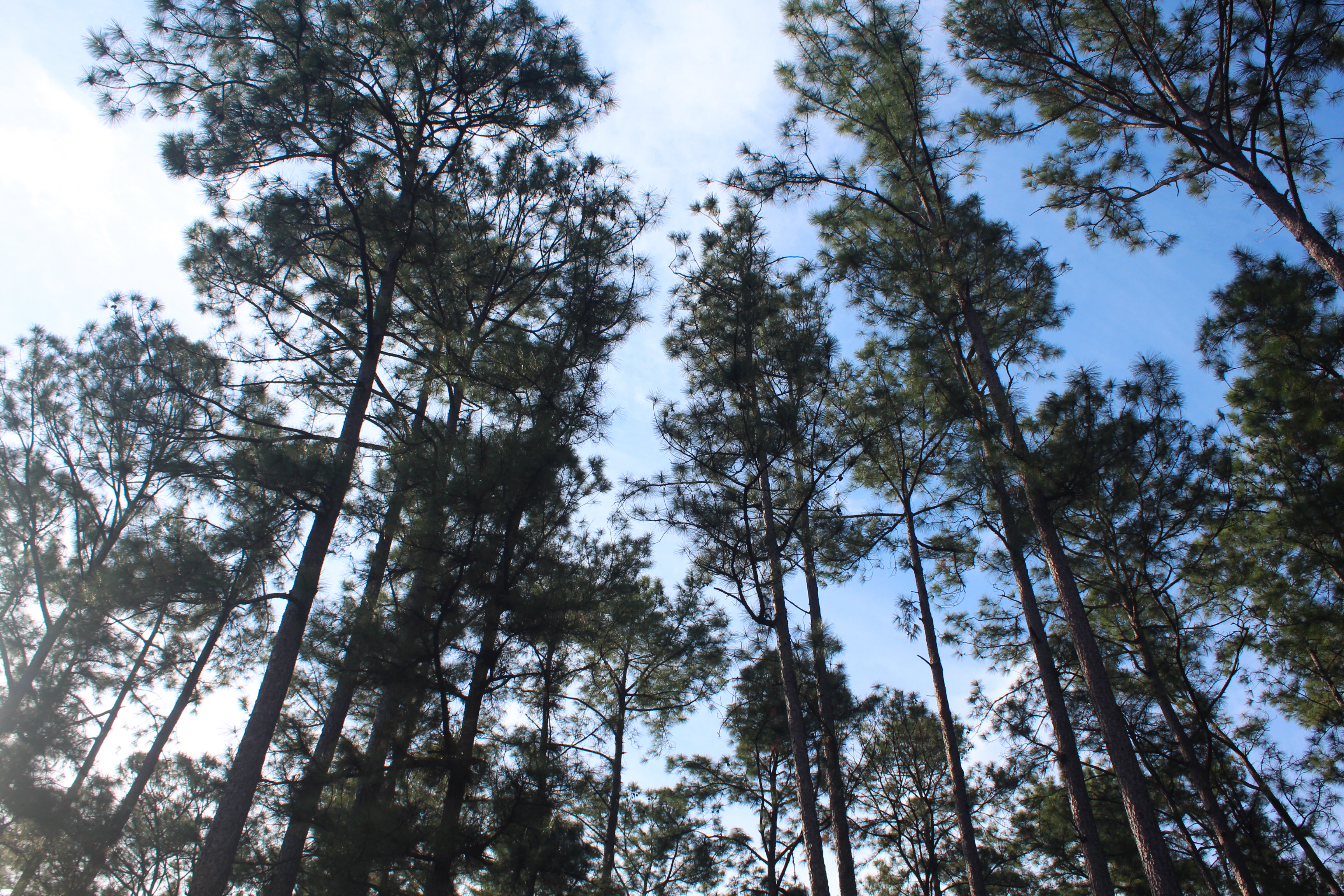
Forest in Cuba.
UNDP Cuba
Cuba's geological evolution, climate, and insular geography led to highly diverse ecosystems with various endemic species. Nonetheless, declining forest cover and climate change hazards have threatened the country's rich biodiversity. Moreover, CO2 emissions accelerate the impacts of climate change on ecosystems, in addition to harming human well-being.
To address these challenges, the Cuban government, with support from the Biodiversity Finance Initiative (BIOFIN) of the United Nations Development Programme (UNDP) and the Ecovalor project, established a payment for environmental services scheme that rewards carbon removal through sustainable forest management.
By March 2025, the scheme disbursed USD 238,000 (CUP 5,709,066) in payment for environmental services, associated with the removal of 999,473 tons of carbon across 12,646 hectares of forest. This initiative contributes to climate mitigation, ecosystem conservation, and the responsible use of natural resources in Cuba.
Last update: 17 Dec 2025
120 Views
Photo and video gallery
Context
Challenges addressed
Cuba's ecosystems, with rich fauna and flora, provide many services that support human well-being and economic development, including access to natural resources, carbon storage, and the recreational use of forests. However, diminishing forest cover, soil erosion, and climate change hazards have driven biodiversity loss in the country, according to Cuba's National Environmental Strategy 2021-2025.
CO2 and other greenhouse gas emissions contribute to climate change and, as a result, further accelerate biodiversity loss in the country. These emissions also increase pollution and reduce air quality, thereby harming human health.
Given this situation, initiatives that link carbon removal with sustainable forest management offer an opportunity to deliver integrated benefits for both biodiversity and climate, such as halting ecosystem loss, advancing climate mitigation, and reducing pollution levels.
Location
Pinar del Río, Cuba
Matanzas, Cuba
Villa Clara, Cuba
Las Tunas, Cuba
Holguín, Cuba
Caribbean
Process
Summary of the process
The development of a payment for environmental services scheme for forest carbon removal in Cuba began with interministerial dialogues, adopting a cross-sectorial approach and leveraging on the expertise, capabilities, and perspectives of different ministries. During the planning process, it was defined that individuals and legal entities managing forest assets and interested in receiving payments under the scheme must first obtain a certification verifying carbon removal. Cuba's Agroforestry Research Institute was designated as the authority responsible for developing the certification methodology and issuing accreditations, an indispensable stage in the process to qualify for payments.
Building Blocks
Dialogue among different stakeholders to develop the first payment for environmental services scheme in Cuba
The development of a payment for environmental services scheme is inherently cross-sectoral, since it encompasses environmental, fiscal, planning, and regulatory matters. BIOFIN and the Ecovalor project facilitated interministerial dialogues in Cuba starting in 2020, involving directors from the Ministries of Agriculture; Finance and Prices; Economy and Planning; and Science, Technology, and Environment.
These interministerial meetings facilitated effective discussions and the joint design of the payment for environmental services scheme. For instance, it was defined that the National Forestry Development Fund (FONADEF) would allocate resources for payments, and that certification of forest carbon removal would be a mandatory prerequisite to access the scheme. Additionally, the interministerial dialogues provided a space to advance the necessary regulations for the scheme, for which the Ministry of Agriculture was crucial.
This collaborative process resulted in the effective design of the payment for environmental services scheme and its approval through Regulation 28/2024 from the Ministry of Agriculture.
Enabling factors
Government's willingness to develop the payment for environmental services scheme, with interested parties across different ministries.
Lesson learned
The establishment of coordination mechanisms, including interministerial and key stakeholder dialogues, constitutes a key component of this initiative. They provide a space to address the interests and concerns of all relevant parties, share knowledge among different actors, and assign responsibilities based on the mandate and legal capacities of each ministry. The establishment of a Resolution supporting these mechanisms and the existence of a certifying entity have proven vital, as well as the monitoring of results in the areas where the mechanism has been implemented, in order to assess its scaling-up potential.
Development of a certification methodology for forest carbon removal
Under a payment for environmental services scheme, it is crucial to ensure that only individuals who contributed to the outcome associated with the mechanism — in Cuba's case, forest carbon removal — receive payments. This guarantees that the scheme effectively encourages a shift towards nature-positive practices and that financial resources are used wisely.
To this end, individuals or organizations seeking to receive payment for environmental services in Cuba must first obtain a certification confirming forest carbon removal in their forest assets. Following Regulation 28/2024, carbon removal is the accumulation or retention of carbon in the biomass of living trees.
The Agroforestry Research Institute of the Ministry of Agriculture is responsible for issuing these certifications. This process employs the Environmental Externalities Accounting (Ex-ACT) tool, from the Food and Agriculture Organization (FAO), and the SUMFOR methodology, created by the Agroforestry Research Institute.
The SUMFOR methodology enables the calculation of carbon retention over a 10-year period from the baseline year and contributes to determining the role of forest ecosystems in providing environmental services. Its development delved into aspects related to the validation and evaluation of indicators for sustainable forest management.
Enabling factors
- Technical expertise within the Agroforestry Research Institute for the development of the methodology and issuance of certifications.
- Good reputation and trust in the work of the Agroforestry Research Institute.
- Approval of a resolution by the Ministry of Agriculture for the establishment of the payment for environmental services scheme.
Lesson learned
- It is essential to associate payment for environmental services schemes with verifiable nature-positive outcomes, ensuring that financial resources truly promote sustainable practices.
- Certification can serve as an effective tool to ensure applicants meet the requirements to receive payments for environmental services.
The instrument: Cuba's payment for environmental services scheme
Cuba's payment for environmental services scheme rewards carbon removal through sustainable forest management. Individuals and legal organizations managing forest assets are eligible to apply. Compensation is calculated based on tons of CO2 removed rather than forest area under management. This science-based approach precisely links payments with mitigation achievements, since different forest types have varying CO2 removal potential, even when covering the same number of hectares.
Individuals and legal entities interested in receiving payments must apply through the Municipal State Forestry Service, submitting up-to-date legal documents that demonstrate the legitimacy of their tenure over forest assets. Then, applicants must calculate the amount of carbon removed, for which they can hire accredited, specialized technical services. Following this, they must submit the calculation results to the Agroforestry Research Institute, which will review the calculations and issue the forest carbon removal certification. Finally, applicants receive payments.
Different payment rates were established with the objective of recognizing varying carbon removal potential:
- Natural producing forests: USD 0.29 (7.00 CUP)/ ton of CO2.
- Natural conservation forests: USD 0.20 (5.00 CUP)/ ton of CO2.
- Artificial forests: USD 0.13 (3.00 CUP)/ ton of CO2.
Enabling factors
- Availability of resources from the National Forestry Development Fund (FONADEF) for the provision of payments.
- Awareness of and interest in the scheme among individuals and legal entities.
Lesson learned
- Payment for environmental services schemes are valuable mechanisms for encouraging individuals and legal entities to adopt and/or maintain sustainable practices, by compensating for lost economic opportunities and financially rewarding this transition.
- The outcome from the pilot implementation of the payment for environmental services scheme in Cuba was positive and there is interest in scaling up this mechanism. To this end, the scheme was included among the new resource destinations of the Forest Development Fund, and Cuba's forestry legislation is currently being updated. The Ministry of Agriculture and the Ministry of Finance and Prices are also evaluating additional necessary conditions for scaling up this scheme.
Impacts
As of March 2025, USD 238,000 (CUP 5,709,066) was disbursed under Cuba's payment for environmental services scheme, rewarding the removal of 999,473 tons of carbon from the atmosphere across 12,646 hectares of forest.
This achievement contributes to climate mitigation, the restoration and maintenance of ecosystem services, the protection of forest heritage, the responsible use of natural resources, and the improvement of forest workers' income and well-being.
Beneficiaries
- Cuba's forests and ecosystems.
- Cuba's forest workers.
- The whole population benefits from less carbon in the atmosphere and better conserved ecosystems.
Global Biodiversity Framework (GBF)
GBF Target 2 – Restore 30% of all Degraded Ecosystems
GBF Target 7 – Reduce Pollution to Levels That Are Not Harmful to Biodiversity
GBF Target 8 – Minimize the Impacts of Climate Change on Biodiversity and Build Resilience
GBF Target 11 – Restore, Maintain and Enhance Nature’s Contributions to People
GBF Target 14 – Integrate Biodiversity in Decision-Making at Every Level
GBF Target 19 – Mobilize $200 Billion per Year for Biodiversity From all Sources, Including $30 Billion Through International Finance
Sustainable Development Goals
SDG 3 – Good health and well-being
SDG 13 – Climate action
SDG 15 – Life on land
SDG 17 – Partnerships for the goals
Connect with contributors



Other contributors
Mayra Casas Vilardell
UNDP BIOFIN
Arnaldo Alvarez Brito
Institute of Agroforestry Research (INAF) of Cuba
Aylem Hernández Ävila
Ecovalor - Global Environment Facility (GEF) project
Georgina Diaz Quintero
National Forestry Development Fund (FONADEF)