Increasing funding for protected areas in Kazakhstan: Strengthening management plans, offering paid services, and enhancing the skills of current and future generations
Full Solution

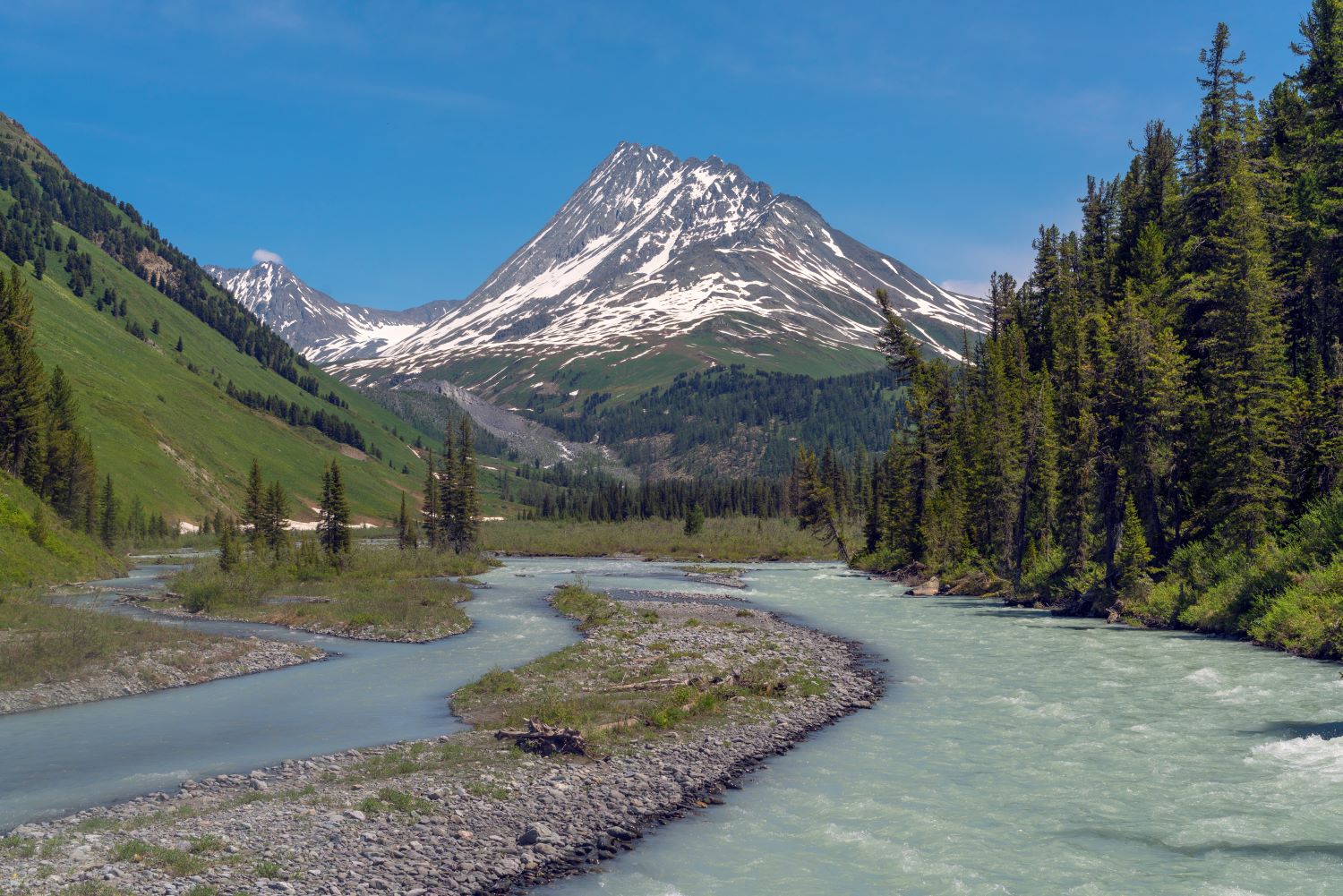
East Kazakhstan region, Belukha Mountain range.
UNDP Kazakhstan
Protected areas in Kazakhstan expanded yearly, reaching 25 million hectares in 2018. However, public funding did not increase accordingly. As a result, the amount of financing per hectare of protected area declined. Challenges in planning and law implementation aggravated this situation.
The Government of Kazakhstan, supported by the Biodiversity Finance Initiative (BIOFIN) of the United Nations Development Programme (UNDP), promoted legal reforms and capacity building to enhance the management and financial sustainability of protected areas. This support was jointly provided with the project "Conservation and sustainable management of key globally important ecosystems for multiple benefits" funded by the Global Environment Facility (GEF).
This initiative catalysed additional public funding for protected areas, which rose from USD 22.5 million in 2018 to USD 60 million in 2024. Moreover, the revenue from paid services in protected areas grew from USD 620 thousand to USD 2.6 million, supporting biodiversity conservation.
Last update: 02 Dec 2025
238 Views
Photo and video gallery

Context
Challenges addressed
As part of the BIOFIN process, Kazakhstan had previously assessed its biodiversity-related policies, regulations, and investments. This review identified a mismatch between law and practice. National guidelines for protected area management were rarely translated into effective, protected area-specific plans, indicating weak planning procedures. Moreover, existing laws and regulations were not updated and did not reflect the biodiversity conservation and restoration activities de facto being conducted on-field.
This situation contributed to a finance gap for protected areas. While their coverage increased steadily in Kazakhstan, the amount of financing per hectare declined. As of 2018, public spending on protected areas was approximately USD 22.5 million. Comparing the activities defined in protected area management plans with budget allocations, the deficit amounted to 48%. Ultimately, this harmed the protection of Kazakhstan's rich biodiversity.
Location
Kazakhstan
North and Central Asia
Process
Summary of the process
The legal recognition of protected area management plans as budget tools and the promotion of protected area paid services are closely linked. Rather than being sufficient on their own, both activities, together, are crucial to ensure that protected areas receive adequate funding in the short and long term. However, to be truly successful, these measures must be implemented by professionals with the necessary skills to design and implement effective management plans including budgets, and paid services. This requires technical assistance and knowledge transfer among generations of professionals in the country, enabling the government to effectively continue these activities after BIOFIN’s advisory support.
Building Blocks
Creating legal foundations and developing methodologies to strengthen protected area management plans
The first step toward increasing government funding for protected areas in Kazakhstan involved strengthening the legal framework and procedures for their management. With support from BIOFIN, an amendment to the Law on Protected Areas was drafted and approved in 2017. The new clause recognizes approved protected area management plans as budgetary instruments that should receive funding. In practice, this means that the government is legally bound to fund each of the management plans approved.
As a result, ensuring that protected area management plans are well designed, both in terms of biodiversity management and budgeting, became crucial for the proper allocation of funding. In 2021, BIOFIN supported the creation of a methodology for the development of protected area management plans, which was officially agreed upon by the Scientific and Technical Council of the Forestry and Wildlife Committee. Reflecting the new methodology, official Rules for the preparation of management plans were developed and approved by the Minister of Ecology and Natural Resources in 2022.
Enabling factors
- Political commitment across different branches of the government to enhance the legal and regulatory environment for managing protected areas.
- Interest of protected area managers in adopting the new methodology for management plans.
Lesson learned
Comprehensive and updated legal frameworks, methodologies, and regulations enhance the effectiveness of protected area management plans. Strengthening the law can itself be an effective solution, ensuring alignment between policy and practice, and that protected areas are adequately funded to carry out the activities outlined in their management plans.
Training current and future generations for long-term improvement in protected area management


This initiative also addresses gaps in human capital for protected area management and budgeting by 1) training current professionals to independently develop and update plans after BIOFIN's support, and 2) preparing university students to become skilled biodiversity professionals in the future.
Regarding the first component, BIOFIN has supported organizing in-person and online workshops on protected area budgeting for managers and employees across Kazakhstan since 2020. Moreover, in 2021, BIOFIN launched an 8-hour online training on protected area budgeting on the Learning for Nature platform. The course covers protected area management, budget planning, and approaches to diversifying funding sources. It is open to anyone interested, helping to disseminate knowledge widely.
For the second component, BIOFIN partnered with three universities — Saken Seifullin Kazakh Agrotechnical Research University, Kazakh National Agrarian Research University, and Toraygyrov University — to launch an academic course on sustainable financing for protected areas. Titled “Financial Planning for Protected Areas”, the course is divided into three modules: budget planning, business planning, and basics of grant financing. It equips future environmental professionals with knowledge and skills on biodiversity finance.
Enabling factors
- Available staff with expertise in designing and delivering online and in-person training, workshops, and courses.
- Funding for delivering the courses.
- Students' interest in taking the academic course, supported by proper engagement activities and communication.
Lesson learned
- A well-designed protected area policy backed by updated legislation may not be successful if those responsible for implementation lack the necessary skills. Ensuring that protected area managers are properly trained to develop effective management plans and budgets is crucial for securing adequate funding.
- Challenges may persist when interventions focus on human capital development solely for current generations. By partnering with academic institutions, this initiative promotes knowledge sharing across generations of students and professionals.
Promoting paid services in protected areas to diversify funding sources and achieve long-term financial sustainability
Finally, this initiative supported protected areas in offering their own paid services, an effective strategy to generate independent revenue and enable annual funding growth.
In 2023, BIOFIN assisted the government of Kazakhstan in developing a list of fee-based services that protected areas can provide, alongside calculating appropriate tariffs. It was suggested that these tariffs are pegged to the country's minimum calculation index, which is used to determine taxes and social payments and adjusted according to inflation and other macroeconomic indicators. Pegging the tariffs reduces variation in protected area service fees and, consequently, diminishes public mistrust regarding the purpose of these tariffs. It also ensures that fees increase every year according to inflation, thereby becoming a sustainable source of revenue in the long term.
The Ministry of Ecology and Natural Resources approved the list in 2024, which was registered with the Ministry of Justice.
Enabling factors
- Legal and regulatory frameworks that allow protected areas to offer fee-based services.
- Effective partnership among government ministries, protected area managers, and other stakeholders on the definition of protected area paid services.
Lesson learned
Offering paid services enables protected areas to generate their own revenue, achieve a more stable funding source, and enhance their conservation efforts. This is particularly important as governments face competing priorities, and government budget allocations for protected areas may become secondary during financial, health, or other crises.
Impacts
Public funding allocated to protected areas in Kazakhstan rose from USD 22.5 million in 2018 to USD 60 million in 2024, an increase of approximately 160%, linked to the legal recognition of management plans as budgeting instruments that must be funded.
In addition, income from protected area paid services grew from USD 620 thousand in 2018 to USD 2.26 million in 2024, a 260% expansion that paves the way for long-term financial sustainability. Together, these figures represent an increase from USD 0.76 to 2.34 of finance per hectare protected.
These achievements contribute to better managed protected areas in Kazakhstan now and in the future, thereby enhancing biodiversity conservation in the country.
Beneficiaries
Protected area workers, government officials, and students at the three universities. The whole population of Kazakhstan benefits from well-managed and funded protected areas through their ecosystem services.
Global Biodiversity Framework (GBF)
GBF Target 1 – Plan and Manage all Areas To Reduce Biodiversity Loss
GBF Target 3 – Conserve 30% of Land, Waters and Seas
GBF Target 11 – Restore, Maintain and Enhance Nature’s Contributions to People
GBF Target 14 – Integrate Biodiversity in Decision-Making at Every Level
GBF Target 19 – Mobilize $200 Billion per Year for Biodiversity From all Sources, Including $30 Billion Through International Finance
GBF Target 21 – Ensure That Knowledge Is Available and Accessible To Guide Biodiversity Action
Sustainable Development Goals
SDG 4 – Quality education
SDG 15 – Life on land
SDG 17 – Partnerships for the goals
Story

Gulmira Nysanbayeva has been working in the Charyn State National Nature Park since its foundation in 2004.
UNDP Kazakhstan
Gulmira Nysanbayeva is the Director of the Charyn State Nature Park, a 127,050-hectare area in the Almaty region, near the borders with Kyrgyzstan and China. She has worked at the park since its foundation in 2004, witnessing various stages of biodiversity conservation, notable achievements, and recurrent challenges.
Gulmira emphasized that the new management plan, which includes an improved funding structure, has already had positive effects on the park. She notes: “As a flagship park in the Almaty region, Charyn National Park has seen an increase in ecotourism but needs stable funding. The new management plan provides this financial stability”.
To read the original version of Gulmira’s story, please visit: https://www.biofin.org/news-and-media/kazakhstan-triples-protected-area-budget-advancing-biodiversity-goals.
Connect with contributors



Other contributors
Ainur Shalakhanova
UNDP BIOFIN
Gulnara Maguzumova
UNDP Kazakhstan
Yerkulan Duisekeyev
UNDP Kazakhstan
Meruyert Sarsembayeva
UNDP Kazakhstan